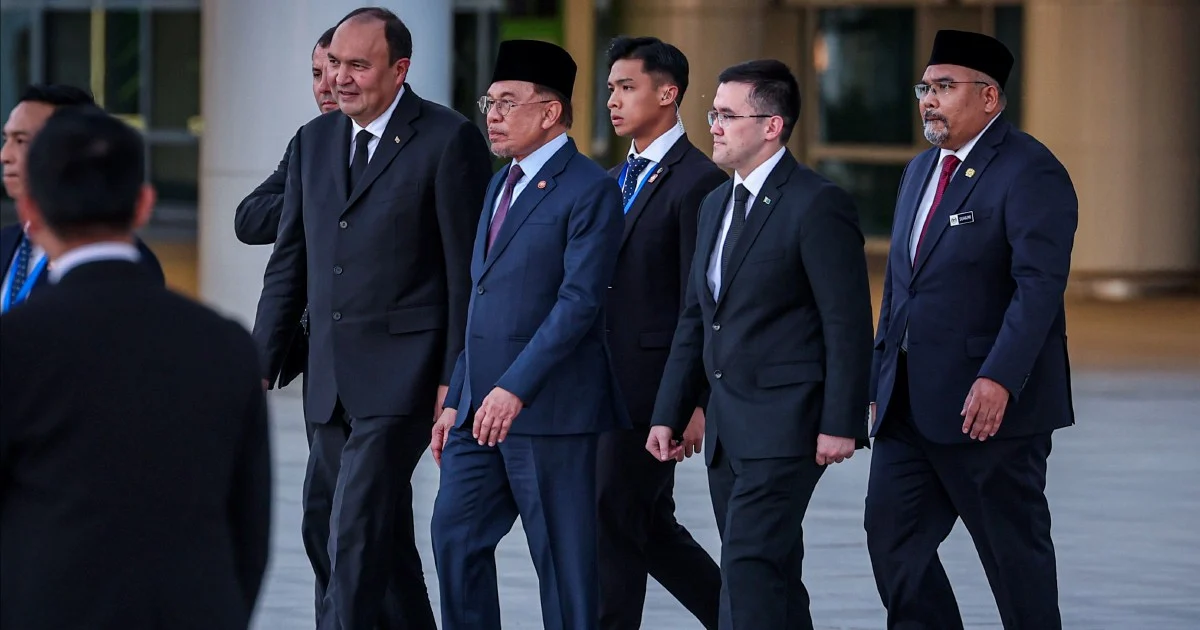
Prime Minister Datuk Seri Anwar Ibrahim is concluding his state visit to Turkmenistan on a day packed with significant diplomatic engagements designed to elevate bilateral relations and create fresh opportunities for Malaysian businesses in Central Asia. The Central Asian nation, positioned along the eastern littoral of the Caspian Sea, represents an emerging market with substantial potential for Malaysian investors and traders seeking to diversify beyond traditional Asia-Pacific partnerships.
The final leg of Anwar's official visit signals Kuala Lumpur's strategic pivot toward strengthening connections with resource-rich nations in the broader Eurasian sphere. Turkmenistan, home to one of the world's largest natural gas reserves and significant hydrocarbon wealth, has become an increasingly attractive destination for Malaysian corporations exploring expansion into new markets. The timing of this high-level diplomatic mission reflects Malaysia's broader economic diversification strategy, particularly as domestic companies look to internationalise their operations and secure long-term partnerships beyond the crowded Southeast Asian market.
The series of structured engagements scheduled for the closing day of Anwar's visit underscores the depth of discussion Malaysia intends to pursue with Turkmenistan's leadership. These conversations will likely encompass trade protocols, investment frameworks, and sectoral cooperation across areas where Malaysian expertise could prove valuable. The emphasis on formal, methodical dialogue rather than ceremonial interactions demonstrates both governments' serious commitment to building substantive economic relationships rather than merely symbolic gestures.
Central Asia's geopolitical significance has grown considerably in recent years, particularly as global supply chains reorganise and major powers recalibrate their strategic interests in the region. Malaysia's engagement with Turkmenistan positions the nation as a reliable economic partner willing to look beyond conventional trade routes and established regional blocs. This positioning could enhance Malaysia's standing as a pragmatic bridge-builder between South Asia and Southeast Asia, capable of facilitating connections across diverse economic zones.
For Malaysian enterprises, Turkmenistan offers untapped commercial possibilities. The country's ongoing development projects, infrastructure modernisation initiatives, and industrial expansion create openings for Malaysian firms in construction, logistics, technology, and skilled services. Additionally, Turkmenistan's geographic location as a transit hub between East and West means that Malaysian companies establishing operations there could leverage the country as a platform for accessing broader Central Asian and Caucasian markets that remain relatively underpenetrated by Southeast Asian businesses.
The bilateral economic relationship between Malaysia and Turkmenistan remains comparatively nascent, suggesting considerable room for expansion. Unlike well-established trade corridors with China, Japan, or the European Union, Malaysia-Turkmenistan commerce has not yet reached its ceiling, meaning ambitious initiatives today could compound into substantial mutual benefit over coming decades. Anwar's personal involvement in these negotiations signals that Putrajaya views this relationship as strategically important rather than peripheral to national economic priorities.
Turkmenistan's hydrocarbon resources represent both a direct trading opportunity and an indirect catalyst for broader economic cooperation. While Malaysia is not an energy-deficient nation, the country's petrochemical and refining sectors could benefit from exploring strategic partnerships with Turkmenistan's energy sector. Such arrangements might encompass joint ventures, technology transfer, or collaborative research into advanced energy processing and environmental management technologies where Malaysian expertise could command premium value.
The diplomatic architecture being constructed during this visit also carries implications for Malaysia's broader positioning within Central Asian affairs. As ASEAN increasingly seeks to strengthen engagement with nations beyond the immediate geographic region, individual member states like Malaysia can advance the bloc's interests while simultaneously pursuing bilateral advantages. Turkmenistan's non-aligned stance and independent foreign policy make it a particularly valuable partner for Malaysia, as cooperation carries no baggage from Cold War alignments or contemporary great-power rivalries.
Cultural and people-to-people exchange initiatives will likely feature in discussions, recognising that sustainable trade relationships flourish when underpinned by mutual understanding and cross-cultural familiarity. Educational partnerships, visa facilitation, and tourism promotion could complement formal trade negotiations, creating multiple channels through which both societies can benefit from closer association. The presence of Islamic heritage in both nations—though expressed differently—also provides a potential avenue for civilisational dialogue alongside commercial engagement.
For Malaysian policymakers, successfully cultivating the Turkmenistan relationship demonstrates capability to expand national economic influence geographically beyond Southeast Asia's increasingly crowded marketplace. Success here could catalyse similar missions to other Central Asian republics, gradually establishing Malaysia as a recognised economic actor in a region historically dominated by larger regional and external powers. This measured but consistent geographic diversification strengthens Malaysia's economic resilience by reducing dependency on traditional trading partners while opening fresh revenue streams for domestic companies.
The outcomes of Anwar's high-level engagements in Ashgabat will likely be measured not merely in immediate trade volumes but in the foundational agreements and cooperative frameworks established for long-term partnership. Formal mechanisms for regular dialogue, sectoral collaboration agreements, and perhaps joint working groups on specific industries could transform this state visit from a diplomatic courtesy into a genuine inflection point in Malaysia-Turkmenistan relations.

