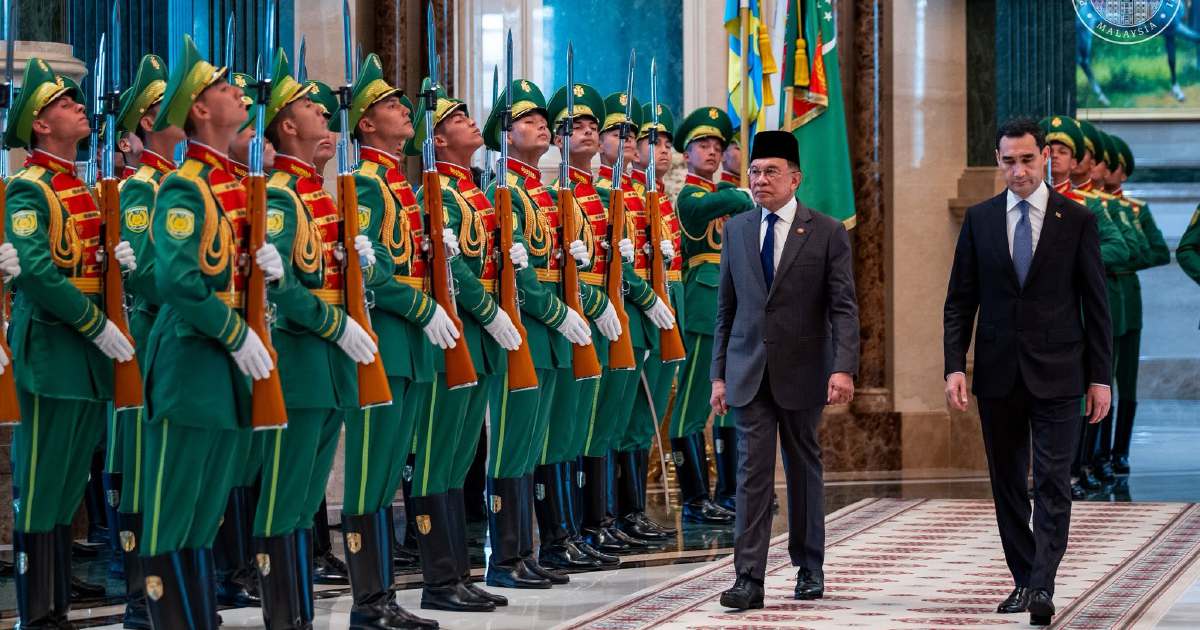
Prime Minister Datuk Seri Anwar Ibrahim was granted a full state reception at Turkmenistan's Presidential Palace in Ashgabat, symbolizing the strengthening relationship between Malaysia and the Central Asian country. The ceremony marked Anwar's debut official visit to Turkmenistan since his appointment as Prime Minister, reflecting the importance both nations place on bilateral engagement and cooperation at the highest levels of government.
The formal welcome underscores Malaysia's broader engagement strategy with Central Asia, a region increasingly significant for Southeast Asian nations seeking to diversify partnerships and economic opportunities beyond traditional markets. Turkmenistan, with its vast energy reserves and position along historic trade corridors, represents a valuable partner for Malaysia's strategic interests in the region, particularly as the country seeks to strengthen its footprint in continental Asia.
For Malaysia, such high-level visits carry substantial diplomatic weight. They signal commitment to building substantive relationships with nations outside the Southeast Asian sphere, while also potentially opening doors for trade, investment, and knowledge exchange. The ceremonial nature of the reception suggests Turkmenistan's government views the relationship as worthy of top-tier diplomatic protocol, indicating receptiveness to deeper bilateral ties.
Central Asia has grown increasingly relevant in regional geopolitics and economics. Nations like Turkmenistan possess abundant hydrocarbon resources and serve as crucial connectors between Asia, Europe, and the Middle East. For Malaysia, establishing cordial relations with Central Asian governments can facilitate access to new markets, enable collaboration on energy security, and create platforms for dialogue in regional forums.
Anwar's visit also reflects Malaysia's "forward diplomacy" approach, whereby the country actively cultivates relationships with diverse partners across multiple continents rather than limiting itself to traditional regional alignments. This strategy gains particular prominence given shifting global power dynamics and the importance of maintaining strategic autonomy in Malaysia's foreign policy orientation.
The timing of this inaugural official visit suggests careful diplomatic planning. State visits typically occur when both nations have identified concrete areas for cooperation or wish to mark a significant juncture in their relationship. The Presidential Palace ceremony indicates that discussions likely extended beyond ceremonial niceties to substantive matters of mutual interest, potentially encompassing trade frameworks, cultural exchanges, or regional security concerns.
Turkmenistan's reception style, characterized by formal protocol and presidential involvement, demonstrates the nation's desire to cultivate strengthened ties with Asian countries beyond its immediate neighbourhood. For Malaysian officials, understanding and respecting such ceremonial traditions remains crucial to successful diplomacy. The official welcome provides a foundation upon which both delegations can build working relationships and explore areas of common interest.
From a Malaysian perspective, engaging with Central Asia addresses several strategic objectives simultaneously. It diversifies the country's diplomatic portfolio, reduces over-reliance on any single region, and positions Malaysia as a serious player in Eurasian affairs. Additionally, such visits generate valuable intelligence and insights regarding geopolitical developments in Central Asia, where China, Russia, and Western powers maintain competing interests.
The visit arrives at a moment when Asian nations are reassessing their international alignments. Malaysia, as a Non-Aligned Movement member and voice for Global South perspectives, can leverage relationships with Central Asian states to advance its diplomatic agenda on issues ranging from sustainable development to multilateral cooperation frameworks.
Bilateral engagements at the presidential level typically culminate in joint statements, agreements, or understanding memoranda outlining areas for future cooperation. While specific outcomes remain to be disclosed, the ceremonial welcome indicates both governments intend to move beyond symbolic exchanges toward tangible initiatives that benefit their respective populations.
For Malaysian observers, this visit represents an expansion of the nation's diplomatic horizons and a practical demonstration of Kuala Lumpur's commitment to engaging comprehensively across the Asian continent. The Presidential Palace welcome, though ceremonial in nature, carries weight as an invitation for Malaysia to participate more actively in Central Asian affairs while offering Turkmenistan an entry point into Southeast Asian networks and markets.
As Malaysia continues navigating complex regional dynamics and seeking new partnerships, visits such as Anwar's to Turkmenistan reinforce the country's positioning as a bridge between regions and a constructive player in international affairs. The official reception, replete with full state ceremony, validates this strategic approach and sets the stage for potentially significant developments in Malaysia-Turkmenistan relations in the coming months.

