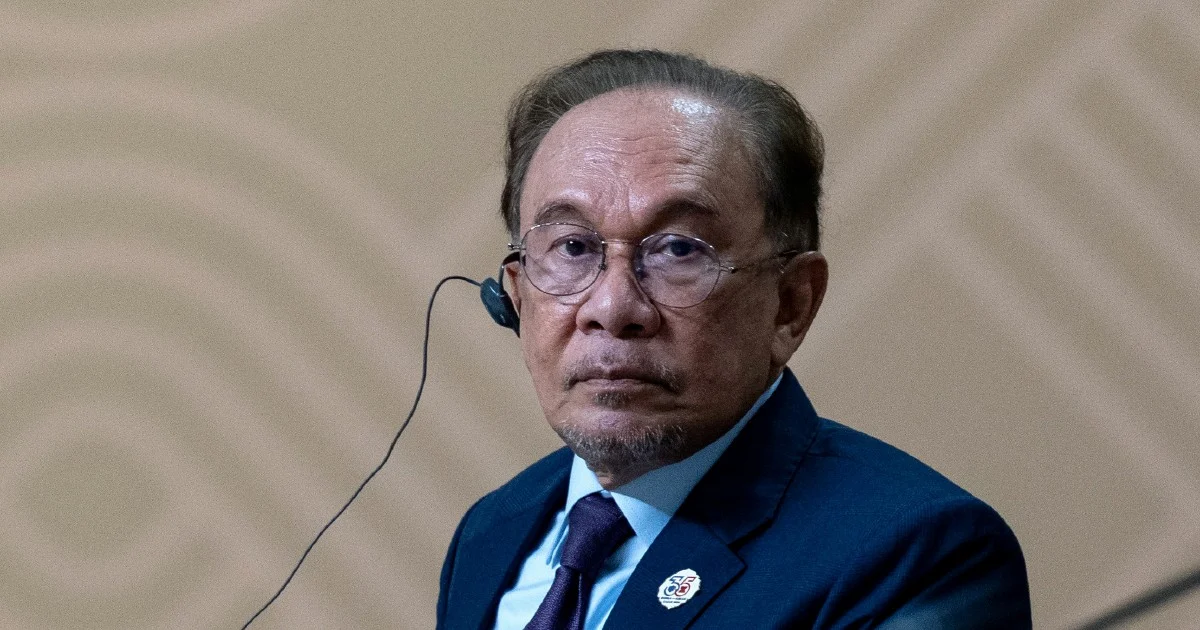
Prime Minister Datuk Seri Anwar Ibrahim has secured a High Court ruling that frees him from the obligation to testify as a witness in a RM30 million civil dispute. The decision overturns an earlier court order that had required the Prime Minister to appear and provide testimony in the case, which centers on businessman Vinod Sekhar.
The outcome reflects the court's assessment that Anwar Ibrahim's presence as a witness was not sufficiently critical to the proceedings, or that other compelling reasons justified setting aside the subpoena. Such applications to be excused from witness duties are typically granted when a party can demonstrate that their testimony is either redundant, can be adequately provided through alternative means, or when their official duties create insurmountable scheduling conflicts.
For Malaysian governance, this decision carries particular significance given Anwar's position as Prime Minister. The ruler of a nation's executive branch bears responsibilities that often cannot be easily delegated or postponed without affecting state operations. The court's allowance of his application acknowledges the practical realities of high-level government service, where even civil disputes cannot routinely draw the country's chief administrator into prolonged legal proceedings without substantial justification.
The RM30 million nature of the claim indicates a substantial commercial dispute. Cases of this magnitude typically involve complex financial transactions or contractual disagreements where multiple parties and documents can establish facts without requiring testimony from every potentially involved individual. The court may have concluded that the claimants possessed sufficient alternative avenues to present their case effectively.
Vinod Sekhar's involvement in the litigation places the matter within Malaysia's business and commercial dispute landscape. The nature of the underlying disagreement remains significant for understanding the dispute's context, though the court's focus shifted to the procedural question of who must testify rather than the substantive merits of either party's claims.
From a legal precedent perspective, this ruling provides guidance on judicial discretion in subpoenaing high-ranking government officials. While no one is theoretically above the law, courts worldwide have developed doctrines recognizing that certain officials require protection from routine compulsion to appear in civil cases. The doctrine of official immunity, while not providing blanket protection, often shapes how courts handle such requests, particularly when national security, sensitive government operations, or essential executive functions might be compromised.
The application process itself—whereby Anwar's legal team filed an application to set aside the subpoena—represents the proper procedural channel for addressing such disputes. Rather than simply ignoring the subpoena or asserting blanket immunity, engaging the court through formal application demonstrates respect for judicial authority while protecting legitimate interests. The High Court's grant of the application suggests the judges found merit in the arguments presented.
For Southeast Asian observers, this case illustrates how different jurisdictions balance competing interests: the importance of civil justice and access to relevant evidence against the practical governance constraints of major public officials. Malaysian courts have demonstrated a willingness to consider such contextual factors, maintaining both the rule of law and operational government capacity.
The decision may have implications for other pending civil cases where high-ranking officials face similar subpoenas. It establishes that the High Court considers each application individually but recognizes that serving as a witness, while theoretically an obligation of all citizens, can be adjusted when compelling practical considerations exist. This nuanced approach prevents both the extremes of complete exemption for the powerful and the impractical requirement that sitting prime ministers abandon government duties to testify in every civil dispute to which they bear some connection.
Moving forward, the Vinod Sekhar case will proceed without Anwar's testimony. The remaining parties will need to establish their positions through other witnesses, documentary evidence, and expert testimony. This outcome reflects a common reality in major litigation—cases succeed or fail based on the weight of available evidence, not merely on compelling any single individual to testify, regardless of their position or role.
The ruling underscores an ongoing balance in Malaysian jurisprudence between holding leaders accountable within the legal system and preserving the practical capacity of government to function. Courts must distinguish between cases where high officials bear direct, irreplaceable knowledge and those where other evidence suffices. By granting Anwar's application, the High Court has signaled that in this particular RM30 million dispute, other testimony and evidence can adequately serve the interests of justice without requiring the Prime Minister's personal appearance in the witness box.

