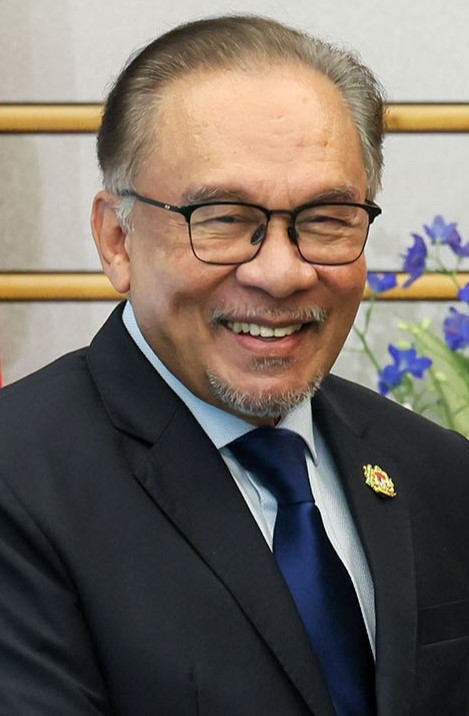
Prime Minister Datuk Seri Anwar Ibrahim has urged the nation to adopt the spirit of Hijrah as a guiding principle for collective progress, positioning the concept as a unifying framework that transcends religious boundaries to address Malaysia's contemporary challenges in governance, economic development and social stability.
The Hijrah—the Prophet Muhammad's migration from Mecca to Medina in the seventh century—carries profound symbolic weight in Islamic tradition, representing not merely physical relocation but spiritual and moral transformation. In invoking this concept, Anwar appears to be drawing parallels between historical migration driven by principle and Malaysia's own need for transformational change, particularly as the nation navigates complex political and economic transitions that have characterised the past decade.
For Malaysian policymakers and observers, the invocation of Hijrah carries particular resonance. The concept encompasses principles of integrity, just governance, and the building of communities founded on shared ethical foundations rather than factional interest. By framing national renewal through this lens, Anwar positions Malaysia's developmental agenda within a moral and spiritual context that may resonate across the country's Muslim-majority population whilst remaining sufficiently universal in its emphasis on truth and security to carry broader appeal.
The timing of such messaging reflects ongoing efforts to consolidate Malaysia's political landscape following years of institutional turbulence. The nation has experienced multiple transitions in government, shifts in coalition politics, and public scepticism regarding institutional integrity. Anchoring the government's vision in the foundational principles associated with Hijrah—truthfulness, justice, and communal welfare—serves to reframe governmental legitimacy around enduring values rather than transactional political arrangements.
Economically, Anwar's emphasis on prosperity through Hijrah principles suggests a development philosophy grounded in ethical capitalism and inclusive growth. Malaysia's trajectory as an upper-middle-income nation requires sustained productivity gains and technological advancement, yet these must occur within frameworks that ensure equitable distribution and social stability. The Hijrah narrative, with its emphasis on community building and collective responsibility, provides philosophical scaffolding for policies addressing wealth inequality and regional disparities that remain persistent challenges.
The security dimension of Anwar's statement deserves particular consideration in Southeast Asia's strategic context. Malaysia faces multifaceted security challenges ranging from transnational terrorism and maritime threats to cyber vulnerabilities and internal communal tensions. By anchoring security within a Hijrah framework emphasizing shared values and communal cohesion, Anwar articulates a vision where national defence emerges not from coercive state apparatus alone but from collective commitment to societal foundations. This resonates with longstanding Islamic concepts of community protection and mutual responsibility.
For Malaysia's diverse population—comprising Muslim Malays, Chinese, Indians, and indigenous communities—the language of Hijrah principles rather than sectarian identity offers potential common ground. The historical Hijrah narrative, whilst distinctly Islamic, contains universally recognisable elements: migration toward justice, building institutions on ethical foundations, and fostering societies where diverse peoples can coexist within systems governed by shared principles. This framing may facilitate broader coalition-building around developmental and security objectives.
Regionally, Malaysia's positioning as a moderate Islamic-majority democracy holds significance in an era of polarised geopolitics and competing narratives about Islam's relationship to modernity and governance. Anwar's articulation of Hijrah principles centred on prosperity and security—rather than on doctrinal matters or sectarian identity—reinforces Malaysia's brand as a nation where Islamic values and contemporary governance can align productively. This distinction matters for international relations, investor confidence, and Malaysia's soft power positioning throughout Southeast Asia and beyond.
The practical implementation of Hijrah-inspired governance requires translating historical and spiritual concepts into concrete institutional reforms. This encompasses anti-corruption measures, judicial independence, transparent policymaking, and inclusive economic participation. The gap between rhetorical commitment to such principles and measurable institutional outcomes will substantially determine whether such messaging generates sustained public confidence or remains symbolic.
Amongst civil society observers and reform advocates, the critical question concerns whether Hijrah principles will guide substantive policy shifts or serve primarily as inspirational framing for existing programmes. Malaysian citizens have witnessed numerous development initiatives and reform pledges; embedding Hijrah principles would require demonstrable commitments to institutional accountability, conflict resolution mechanisms, and mechanisms ensuring that economic prosperity reaches marginalised communities rather than concentrating further among connected elites.
Moreover, invoking Hijrah in contemporary political discourse necessarily engages theological and historical interpretation. Different communities may emphasise different dimensions of the concept—spiritual renewal, social justice, institutional reform, or community resilience. Managing these diverse interpretations whilst maintaining the unifying intent requires sophisticated political communication and genuine commitment to inclusive dialogue.
For Malaysian observers monitoring governance developments, Anwar's emphasis on Hijrah principles as foundational to national renewal signals alignment with Islamic values and development objectives. Whether this represents a recalibration of the government's ideological positioning, a response to demands from religious constituencies, or an attempt to reposition Malaysia within contemporary debates about Islamic governance remains subject to interpretation. Nonetheless, the explicit connection between Hijrah principles and prosperity and security reflects sustained effort to anchor Malaysia's developmental narrative within value systems that carry deep resonance for significant portions of the population whilst maintaining openness to Malaysia's multicultural character.