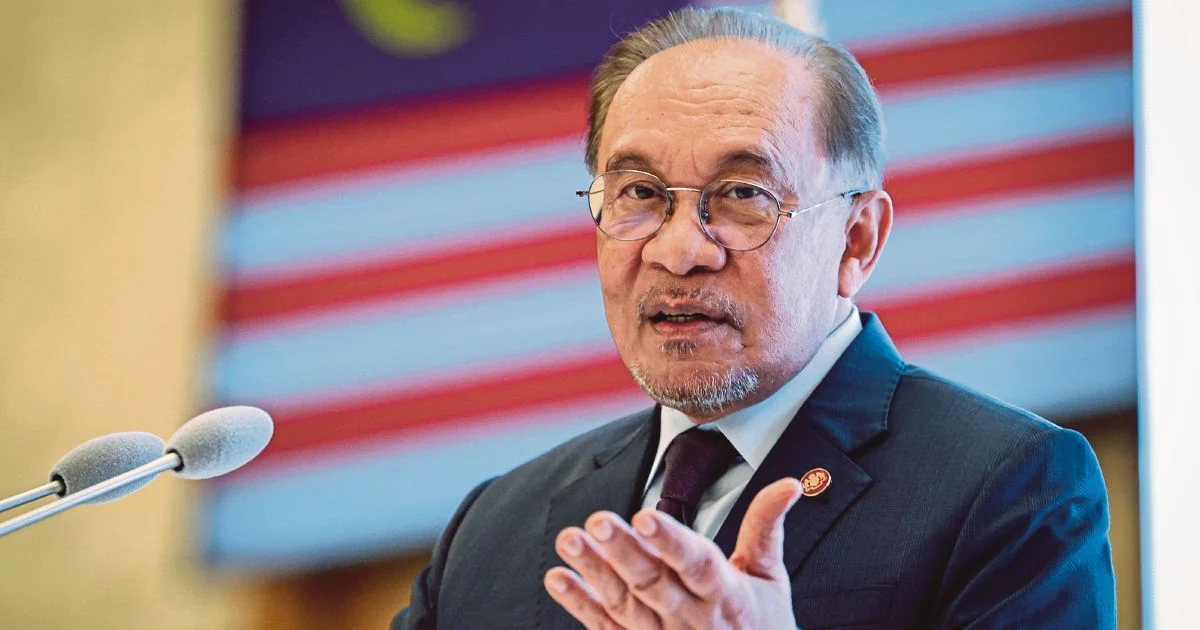
Prime Minister Datuk Seri Anwar Ibrahim has portrayed Petronas's acquisition of a stake in one of the world's largest gas fields in Turkmenistan as a significant endorsement of Malaysia's international standing and investment appeal. Speaking in Batu Kawan, Anwar emphasised that the major energy agreement reflects widespread global confidence in the country's political stability, social unity, and economic capabilities—assertions that carry particular weight given Malaysia's recent history of political turbulence and institutional challenges.
The investment decision by Turkmenistan to include Petronas in one of its flagship hydrocarbon projects represents a substantial vote of confidence in the Malaysian national oil and gas company's technical expertise and operational track record. Turkmenistan, home to some of the world's most abundant natural gas reserves, is notoriously selective about which international partners it engages with, making the decision to award Petronas a significant stake a notable diplomatic and commercial achievement. This selective approach stems from Turkmenistan's careful stewardship of its natural resources and its strategic positioning within global energy markets.
For Petronas, the deal offers access to vast hydrocarbon reserves and the opportunity to diversify its portfolio across geographies and resource types. The company has long pursued international expansion as a means of offsetting declining domestic oil and gas production and maintaining its position as one of Asia-Pacific's leading energy corporations. The Turkmenistan engagement aligns with Petronas's broader strategy of securing long-term gas supply arrangements and developing partnerships with resource-rich nations willing to collaborate with Malaysian interests.
From a Malaysian perspective, the agreement carries implications beyond the immediate commercial benefits to Petronas shareholders. Energy security remains a critical concern for Malaysia's long-term economic development, and access to diversified gas sources abroad helps insulate the nation from supply disruptions or price volatility in regional markets. The deal simultaneously enhances Malaysia's diplomatic influence in Central Asia, an increasingly important region as China and other major powers expand their strategic engagement there.
Anwar's framing of the agreement as reflecting international confidence in Malaysian stability touches on deeper themes about national recovery and institution-building. Malaysia has navigated significant political instability over the past decade, including periods of divided government, ministerial reshuffles, and public concern about governance standards. The Prime Minister's narrative seeks to position recent developments—including the formation of a more stable governing coalition—as having restored investor confidence and re-established Malaysia's reputation as a reliable partner for major projects.
The timing of Anwar's remarks coincides with efforts to attract foreign direct investment into Malaysia's energy transition agenda and broader economic modernisation initiatives. The Turkmenistan partnership demonstrates that despite regional competition from countries like Vietnam, Indonesia, and Thailand for major resource development contracts, Malaysian entities retain significant appeal to international partners. This competitiveness partly reflects Petronas's established reputation, but also Anwar's broader push to position Malaysia as a destination for high-value infrastructure and energy projects.
Central Asian energy cooperation also positions Malaysia within larger geopolitical patterns reshaping regional dynamics. As Western companies reassess their exposure to traditional energy development, and as Asian nations become the primary markets for hydrocarbons, partnerships between Southeast Asian energy companies and Central Asian producers are expanding. Malaysia's engagement in such arrangements reflects its pivot toward Asian-centric economic relationships and its role as a conduit for Central Asian resources to Asian markets.
The gas deal carries potential ramifications for Malaysia's climate commitments and energy transition trajectory. While Petronas's diversification into Turkmenistan's gas reserves appears to prioritise near and medium-term revenue generation, such investments must ultimately align with Malaysia's publicly stated climate objectives and net-zero aspirations. The balance between energy security and environmental responsibility remains an unresolved tension in the company's strategic planning.
Industrially, the agreement strengthens Petronas's position relative to other Asian national oil companies competing for premium assets in emerging markets. The company's ability to secure stakes in world-class gas fields demonstrates its continued viability as a major player despite regional competition intensifying. For Malaysia's broader economy, Petronas remains a significant contributor to government revenues and a champion of technological advancement and skills development in the domestic energy sector.
The diplomatic dimensions of this deal extend beyond energy cooperation. Turkmenistan's willingness to partner closely with Malaysian interests signals a recognition of Malaysia's diplomatic standing and regional influence. As ASEAN's largest oil and gas producer and a significant regional economy, Malaysia maintains natural advantages in negotiating such partnerships, though those advantages require consistent maintenance through effective statecraft and institutional reliability.
Government observers note that major international partnerships of this scale require extensive groundwork involving diplomatic channels, technical evaluations, and political alignments. The successful conclusion of negotiations with Turkmenistan reflects not only Petronas's corporate capabilities but also governmental coordination and Malaysia's capacity to mobilise official channels to support national commercial interests abroad.
Looking forward, the Turkmenistan engagement may encourage Malaysian entities to pursue additional opportunities across Central Asia and beyond. Success in securing premium international assets can create momentum for further partnerships, enhance the country's reputation among potential collaborators, and generate tangible economic returns that validate government investment in institutional stability and business-friendly governance frameworks. For Anwar's administration, such agreements serve as practical demonstrations of the dividends yielded by enhanced political stability and coherent economic strategy.

