Prime Minister Datuk Seri Anwar Ibrahim has dismissed suggestions that his administration has overlooked or marginalised the interests of Malaysia's urban poor population, asserting instead that the government remains firmly committed to safeguarding their welfare and expanding their prospects for advancement. Speaking in response to growing public discourse surrounding urban poverty and housing accessibility, Anwar positioned recent development initiatives as concrete demonstrations of official concern for underprivileged communities seeking improved living conditions.
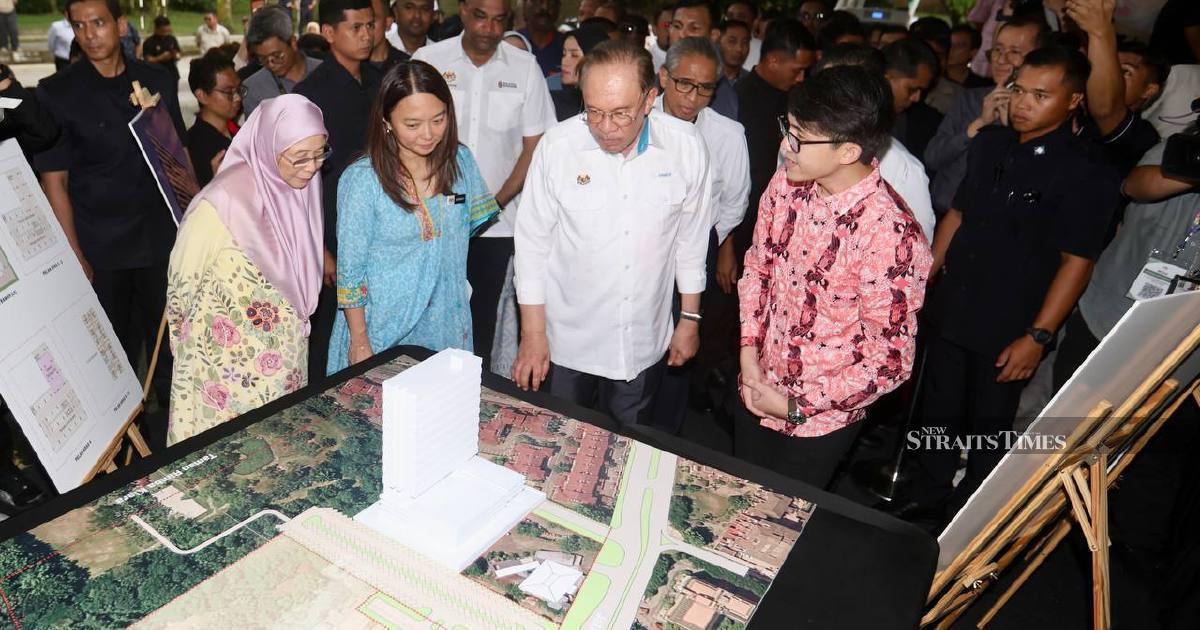
The Prime Minister referenced the Bukit Kiara project as a significant case study illustrating governmental commitment to addressing housing shortages affecting lower-income urban residents. This initiative represents part of a broader policy framework aimed at balancing economic development with social equity considerations, according to Anwar's statements. The project exemplifies the administration's approach of integrating residential development for economically disadvantaged populations within existing urban frameworks rather than displacing communities to peripheral locations.
Urban poverty remains a complex challenge across Southeast Asia's rapidly developing economies, with Malaysia experiencing particular pressures as urbanisation accelerates and property values rise substantially in metropolitan areas. The concentration of employment opportunities in cities creates simultaneous demand for affordable housing and infrastructure that serves lower-income workers. Government initiatives targeting this demographic often face scrutiny regarding whether they genuinely improve living standards or merely provide temporary relief without addressing underlying economic disparities.
Anwar's defence of the administration's approach suggests an awareness of mounting public criticism regarding housing affordability and social protection mechanisms. The emphasis on rights protection rather than charitable assistance reframes the narrative around urban poverty as a matter of social justice and governmental obligation rather than discretionary benevolence. This rhetorical positioning aligns with progressive governance frameworks that treat adequate housing and livelihood security as fundamental entitlements.
The Bukit Kiara initiative's prominence in the Prime Minister's defence indicates its strategic importance within the government's broader urban development portfolio. Large-scale residential projects targeting lower-income segments require significant capital investment and careful planning to ensure financial sustainability alongside affordability. Such projects must navigate competing pressures from commercial interests, environmental considerations, and existing community concerns regarding displacement or neighbourhood transformation.
Malaysian policymakers increasingly confront demographic realities wherein traditional relocation strategies no longer prove politically feasible or socially acceptable. Earlier decades witnessed substantial rural-to-urban migration addressing rural poverty, yet contemporary urbanisation patterns suggest limited alternative options for low-income populations. Consequently, governments must demonstrate capacity to accommodate expanding urban populations within existing city boundaries while managing infrastructure demands and housing costs.
The Prime Minister's explicit reference to rights preservation suggests governmental sensitivity regarding international human rights frameworks and regional labour standards that increasingly scrutinise domestic poverty policies. Malaysia's status as a middle-income nation with significant wealth disparities creates particular vulnerability to criticism regarding social equity outcomes. Official statements emphasising rights protection acknowledge these external pressures while asserting that domestic development prioritises vulnerable populations.
Practical implementation of such initiatives depends substantially upon coordination across multiple governmental levels and departments, from federal housing agencies through municipal authorities responsible for land-use planning. The Bukit Kiara project's viability relies upon sustained political commitment despite potential conflicts with property developers, environmental advocates, and existing residents. Successful delivery requires transparent governance mechanisms and genuine community participation in decision-making processes.
Regional context matters considerably in evaluating such initiatives. Southeast Asian governments increasingly compete for investor confidence and international prestige through flagship development projects. The challenge lies in ensuring that development trajectories genuinely improve living conditions for disadvantaged populations rather than producing superficial improvements masking persistent inequality. Malaysian policymakers must demonstrate sustained commitment beyond individual projects through systematic policy frameworks addressing employment, education, and healthcare access for urban poor communities.
Anwar's defence mechanism suggests potential political vulnerability regarding urban poverty perceptions. Opposition voices likely challenge the adequacy of current initiatives or question whether recent development projects sufficiently prioritise low-income accessibility versus commercial considerations. The government's need to actively articulate its commitment to urban poor welfare indicates that public confidence in this domain remains contested and requires ongoing reinforcement through tangible policy outcomes.
Moving forward, the Bukit Kiara project's success will substantially influence public assessment of governmental competence in addressing urban poverty comprehensively. Project completion timeframes, actual affordability levels, quality of construction and amenities, and satisfaction among beneficiary communities will determine whether such initiatives strengthen or undermine confidence in administration commitments. Sustained engagement with affected communities throughout implementation phases remains essential for maintaining political credibility.
The broader significance of Anwar's statement extends beyond this individual project to encompass fundamental questions regarding Malaysian development priorities during an era of economic complexity and social polarisation. Governments asserting commitment to inclusive growth must deliver measurable improvements in living standards for disadvantaged populations, translating rhetorical promises into structural economic changes. Whether current initiatives genuinely constitute such transformation or represent incremental adjustments to fundamentally unequal systems remains contested terrain in Malaysian political discourse.