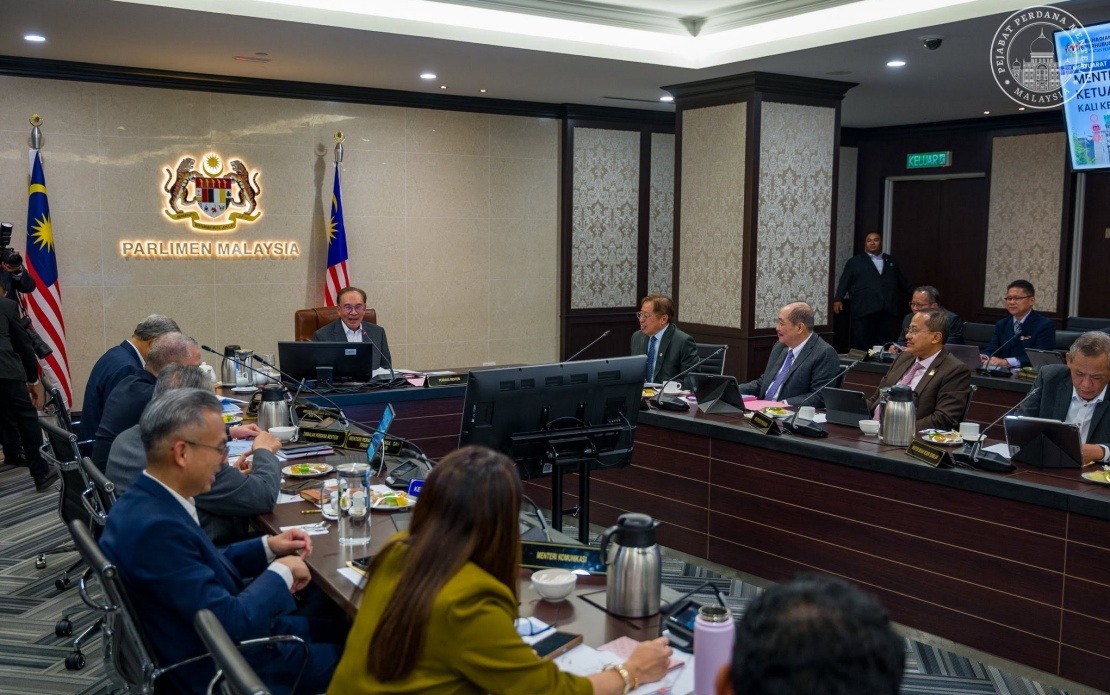
Prime Minister Datuk Seri Anwar Ibrahim has convened the 149th Meeting of Menteris Besar and Chief Ministers at the Parliament Building in Kuala Lumpur, bringing together state leaders to strategise on revitalising Malaysia's economy whilst contending with mounting external pressures. The gathering reflects growing concern within the federal government about the cascading effects of geopolitical instability on the nation's economic prospects, particularly as conflicts in West Asia reverberate through global markets and supply chains that Malaysian businesses depend upon.
The centrepiece of the meeting was a comprehensive discussion on economic strengthening and revival initiatives designed to insulate Malaysia from international uncertainty. Rather than taking a sectoral approach, the government has framed this as a whole-of-nation effort requiring close coordination between federal and state administrations. This emphasis on inter-governmental collaboration signals recognition that economic recovery cannot be achieved through federal policy alone; state governments, which hold jurisdiction over land, agriculture, and local commerce, must be aligned with the centre's strategic vision to achieve meaningful results across the country.
Beyond immediate economic concerns, the meeting examined Malaysia's readiness to confront the El Niño phenomenon, a cyclical weather pattern that threatens multiple dimensions of national security and welfare. The climatic disruption poses acute risks to water supply infrastructure, a critical concern in a nation where urban populations depend heavily on centrally managed distribution systems. Agricultural productivity stands equally vulnerable, as irregular rainfall and elevated temperatures disrupt planting cycles and crop yields across the country's major farming regions.
Food security emerged as a secondary but interconnected concern, given Malaysia's reliance on both domestic production and strategic imports. A severe El Niño event could destabilise prices for essential commodities, triggering inflationary pressures that would burden households already navigating economic uncertainties. The risk of extreme heat and haze episodes compounds these challenges, threatening public health whilst potentially disrupting economic activity through business closures and workforce absences. For a tropical nation like Malaysia, such climatic stress tests the limits of existing preparedness frameworks.
The Prime Minister's subsequent statement emphasised the government's commitment to implementing policies and initiatives with greater integration, efficiency, and citizen-centricity. This formulation suggests dissatisfaction with the effectiveness of previous approaches, where programmes operated in silos without optimal coordination. By calling for more people-centric execution, the government implicitly acknowledges that economic recovery means little if ordinary Malaysians do not experience tangible improvements in living standards, employment, and service quality.
Strengthening economic competitiveness constitutes another pillar of the meeting's agenda. Malaysia faces intensifying regional competition from countries pursuing similar strategies of foreign investment attraction and economic diversification. The nation must position itself as a destination for quality investments rather than competing on labour costs alone, requiring improvements in infrastructure, regulatory clarity, and skills development. This reorientation demands concerted action from state governments, which control industrial zoning, utility provision, and educational institutions that shape workforce capabilities.
The attraction of quality investments over quantity reflects a maturing approach to economic development. Malaysia has historically welcomed any foreign capital inflows; the contemporary challenge involves attracting investors in high-value sectors such as advanced manufacturing, digital technology, and renewable energy. These sectors promise superior wages, knowledge transfer, and sustainable growth compared to traditional labour-intensive industries vulnerable to automation and wage competition from neighbouring economies.
The conflicts in West Asia and their global economic consequences formed an implicit backdrop throughout the discussions. Oil price volatility, disrupted shipping routes, and reduced demand from conflict-affected regions all impact Malaysia's export-dependent economy. State leaders needed to understand how these developments affect their respective regions and what adaptive measures might mitigate negative consequences. Petrochemical industries in Johor, shipping-dependent ports in Sabah and Sarawak, and tourism sectors across multiple states each face distinct vulnerabilities requiring tailored policy responses.
Anwar's emphasis on maintaining unity and consensus between federal and state governments addresses a persistent governance challenge in Malaysia's federal system. Historical tensions between Kuala Lumpur and certain state administrations have sometimes impeded coordinated policymaking. By highlighting the "spirit of togetherness," the Prime Minister signalled commitment to transcending such divisions in pursuit of shared economic objectives. This approach carries particular significance given Malaysia's politically diverse states, some governed by opposition coalitions that might otherwise resist federal initiatives.
The framing of comprehensive development benefits for all Malaysians reflects commitment to equitable growth, a principle enshrined in the Malaysian Constitution but frequently compromised in practice. Regional disparities persist between developed western states and less-developed eastern regions, between urban prosperity and rural deprivation. The meeting's emphasis on ensuring development reaches all Malaysians suggests recognition that sustainable economic recovery requires broadening prosperity beyond traditional urban and industrial centres.
For Malaysian businesses and investors, the signals from this meeting indicate government resolve to navigate near-term economic challenges through coordinated, multi-level action. The prioritisation of climate preparedness suggests increasing integration of environmental considerations into economic planning. The emphasis on quality investments and competitiveness implies that government will continue supporting high-value sectors whilst potentially rationalising support for declining industries. State-level leaders departing the Parliament Building carried responsibility for translating these national directives into concrete local actions, making implementation success dependent on federal-state coordination achieving tangible outcomes in coming months.

