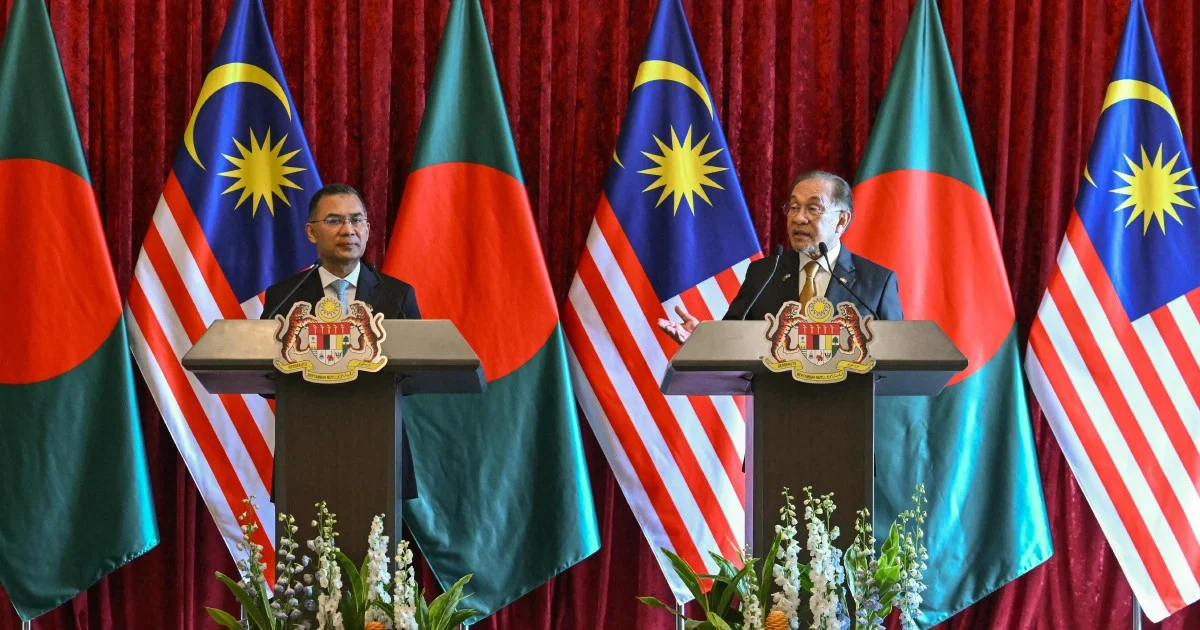
Prime Minister Datuk Seri Anwar Ibrahim has declared an unequivocal commitment to safeguarding Bangladeshi migrant workers from exploitation, placing their treatment at the centre of Malaysia's labour protection agenda. In his pronouncement, Anwar underscored the indispensable role these workers play in sustaining Malaysia's economy and driving the nation's development trajectory.
The Prime Minister's statement reflects growing recognition within government circles that the welfare of migrant labourers directly impacts Malaysia's international standing and domestic stability. By explicitly addressing the plight of Bangladeshi workers—one of the largest migrant labour cohorts in the country—Anwar signalled that labour abuse will not be permitted to continue unchecked. This positioning suggests a deliberate recalibration of the administration's approach to managing the relationship between employers, workers, and regulatory oversight.
Bangladeshi nationals constitute a significant portion of Malaysia's migrant workforce, concentrated primarily in manufacturing, construction, plantation agriculture, and domestic service sectors. These workers frequently encounter conditions ranging from wage theft and contract substitution to unsafe working environments and restrictions on movement. The visibility of such cases in recent years has prompted scrutiny from international observers, including the United States State Department's Trafficking in Persons Report, which has periodically highlighted Malaysia's shortcomings in worker protection.
Anwar's framing of Bangladeshi workers as economically critical reflects a pragmatic acknowledgement that Malaysia's competitiveness depends partly on a stable, fairly treated migrant labour force. Unlike rhetoric that treats migrant workers as dispensable or interchangeable, this positioning recognises their concrete contribution to industries that generate export revenue and employment for Malaysians. The statement implicitly acknowledges that systematic exploitation undermines productivity and creates vulnerabilities within supply chains that international buyers increasingly scrutinise.
The pledge to eliminate exploitative practices carries significance for Malaysia's diplomatic relationship with Bangladesh, a regional partner with which Malaysia maintains extensive trade and people-to-people ties. Bangladesh has periodically raised concerns about its nationals' treatment in Malaysia, particularly when high-profile cases of abuse or trafficking emerge. A demonstrated commitment to enforcement could ease bilateral tensions and reinforce Malaysia's image as a responsible destination for labour migration.
Implementing this commitment will require sustained action beyond rhetoric. Malaysia's labour inspection capacity remains stretched, with enforcement often reactive rather than proactive. Corruption within elements of the recruitment industry and among some employers creates persistent obstacles to accountability. Workers themselves frequently lack knowledge of their rights and fear reporting violations due to immigration status concerns or reprisal from employers who control their documentation.
The construction and manufacturing sectors, where Bangladeshi workers concentrate, have historically been difficult to regulate effectively. Large-scale projects often involve multiple layers of subcontracting, obscuring responsibility and creating spaces where violations occur with minimal detection. Addressing this requires coordinated effort spanning the Ministry of Human Resources, the Immigration Department, the police, and sector-specific regulators—a coordination challenge that has historically proved elusive.
Anwar's emphasis on the intolerance of exploitation also carries domestic political dimensions. The statement appeals to Malaysians concerned about vulnerable workers and reflects values of justice and human dignity that resonate across constituencies. Simultaneously, it demonstrates responsiveness to international pressure and Labour movement demands for stronger protections, positioning the government as progressive on social issues while defending national economic interests.
For Bangladeshi workers themselves, the commitment's real impact will depend on translation into concrete mechanisms. Enhanced labour inspections, streamlined complaint procedures that protect worker confidentiality, stronger penalties for violations, and improved access to justice represent tangible measures that could meaningfully alter their working conditions. International cooperation with Bangladesh authorities to investigate trafficking and coordinated enforcement against exploitative employers would signal genuine commitment.
Regional context matters significantly here. Throughout Southeast Asia, migrant workers from Bangladesh, Myanmar, Cambodia, and Laos experience considerable vulnerability. Malaysia's actions set benchmarks that other nations observe and either emulate or resist. A serious implementation of protections could establish Malaysia as a regional leader in labour standards, while failure would perpetuate the informal understanding that migrant workers occupy a subordinate tier of labour protections.
The challenge ahead involves reconciling economic interests with worker protections in ways that satisfy multiple constituencies. Employers expecting minimal regulatory interference must adjust to stricter oversight. Workers themselves require empowerment through legal literacy and accessible grievance mechanisms. Malaysian citizens must see that protecting migrant workers doesn't undermine local employment or wage standards. These tensions cannot be resolved through statements alone but demand sustained policy work and resource allocation.
Anwar's declaration represents a necessary first step in reorienting state posture toward a vulnerable workforce upon which Malaysia's economy depends. Whether this converts into systemic change remains an open question that will ultimately define his administration's legacy on labour rights. The coming months will prove instructive as observers assess whether enforcement mechanisms are strengthened and whether patterns of exploitation demonstrably decline or merely shift into less visible forms.

