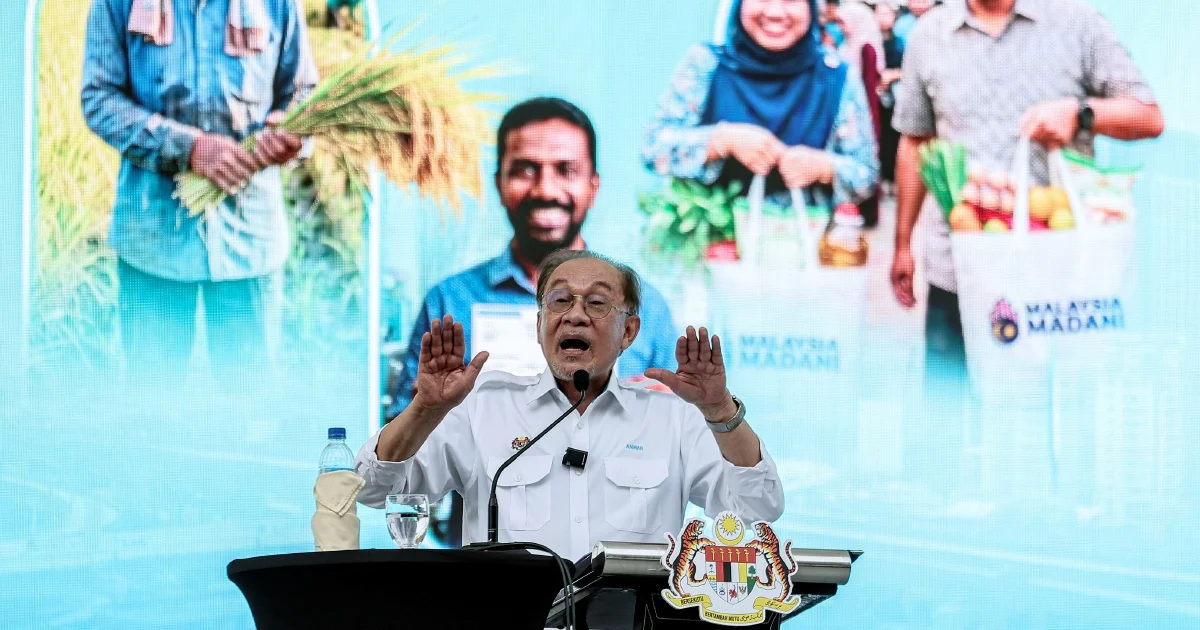
Prime Minister Anwar Ibrahim has unveiled a significant expansion in the government's financial support for community-based security initiatives, announcing that Neighbourhood Watch Areas across Malaysia will receive RM10,000 in annual grants beginning on January 1, 2027. The decision, disclosed in Segamat, represents a marked elevation from the previous allocation of RM6,000, signalling renewed commitment to grassroots crime prevention and neighbourhood cohesion.
The 67 per cent increase in funding addresses long-standing resource constraints that have hampered local vigilance groups in their efforts to maintain safer residential environments. Neighbourhood Watch Areas, commonly referred to as KRT in Malaysia, operate as voluntary associations where residents collaborate on security matters, report suspicious activities, and coordinate with law enforcement to deter crime. Their role has grown increasingly important as communities seek proactive measures beyond conventional policing to address safety concerns.
The timing of the announcement reflects the government's recognition that neighbourhood security operates most effectively when residents themselves feel empowered and equipped. By nearly doubling the annual allocation, the administration is acknowledging that volunteer groups require adequate resources to conduct activities such as night patrols, maintenance of security infrastructure, awareness campaigns, and coordination with local police departments. The RM4,000 additional funding per group represents a tangible investment in community autonomy.
For neighbourhood watch organisations across the nation, the expanded budget creates opportunities to upgrade operational capacity. Groups can now allocate resources toward better communication systems, improved lighting in common areas, training programmes for volunteers, or community engagement events designed to strengthen social bonds and collective vigilance. The flexibility in how funds are deployed allows communities to tailor security responses to their specific environments and vulnerabilities.
This initiative sits within Malaysia's broader strategy to distribute policing responsibilities beyond traditional enforcement agencies. As urban expansion and population mobility reshape residential patterns, centralised police forces alone struggle to maintain intimate knowledge of neighbourhood dynamics and emerging risks. Community-based security frameworks complement state apparatus by leveraging local awareness and resident commitment to prevention. The enhanced grant scheme underscores this complementary relationship.
Statewide implementation of the elevated grant structure requires coordination across federal, state, and local government tiers. The January 2027 commencement date allows sufficient preparation time for relevant authorities to process administrative adjustments, ensure proper disbursement mechanisms, and communicate revised procedures to thousands of registered neighbourhood watch groups. Early announcement of the effective date enables organisations to incorporate the funding into their planning cycles.
For Malaysian households and residential associations, the funding increase carries immediate practical implications. Areas experiencing heightened security concerns may now redirect resources more ambitiously toward prevention, potentially accelerating improvements in neighbourhood conditions. Established groups can stabilise operations previously reliant on sporadic contributions, while emerging communities can establish credible watch programmes from inception with reliable baseline funding.
The announcement also reflects evolving perceptions regarding the cost-effectiveness of community policing relative to conventional law enforcement expansion. Neighbourhood watch programmes offer measurable returns on investment through crime deterrence, faster incident reporting, and the diffusion of security consciousness across residential populations. By expanding funding, the government signals that it views community engagement not as supplementary or marginal but as central to national safety infrastructure.
Regionally, Malaysia's decision to strengthen neighbourhood security networks may prompt neighbouring Southeast Asian governments to reassess their own community policing investments. Singapore, Thailand, and Indonesia have deployed similar volunteer-based security models, and evidence of successful Malaysian outcomes could influence regional policy approaches. The visibility of adequate community resources often shapes public perception of government commitment to grassroots safety concerns.
The initiative also carries implications for addressing inequality in security access. Wealthier neighbourhoods with higher resident contributions can typically fund watch activities comprehensively, while lower-income areas rely disproportionately on government allocation. By increasing baseline grants substantially, the scheme narrows the gap in resource availability between affluent and less privileged communities, promoting more equitable distribution of security capabilities across socioeconomic strata.
Implementation success will depend on effective communication with neighbourhood watch coordinators and consistent budget disbursement discipline. Communities must understand that the increased allocation comes with expectations of transparency, proper financial management, and demonstrated engagement outcomes. Local authorities will require systems to verify fund utilisation and measure impacts on community safety metrics.
Looking forward, the enhanced funding framework establishes a higher operational baseline for neighbourhood security across Malaysia. If complemented by training programmes, improved coordination with police departments, and recognition of volunteer contributions, the investment could meaningfully strengthen the nation's grassroots security architecture. The decision reflects understanding that durable public safety emerges from broad community participation, not solely from institutional enforcement capacity.

