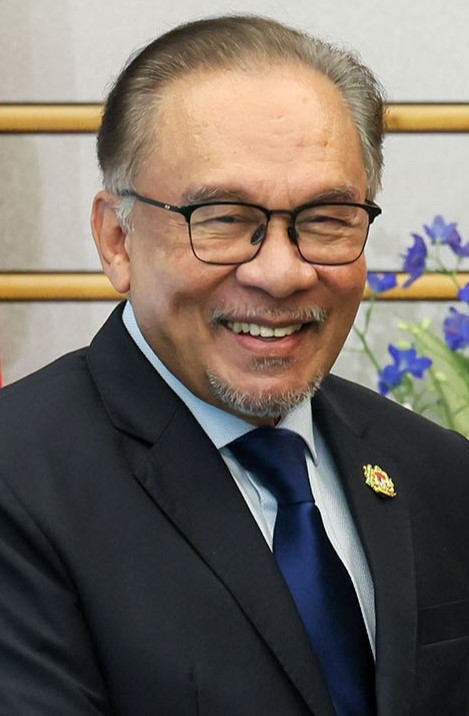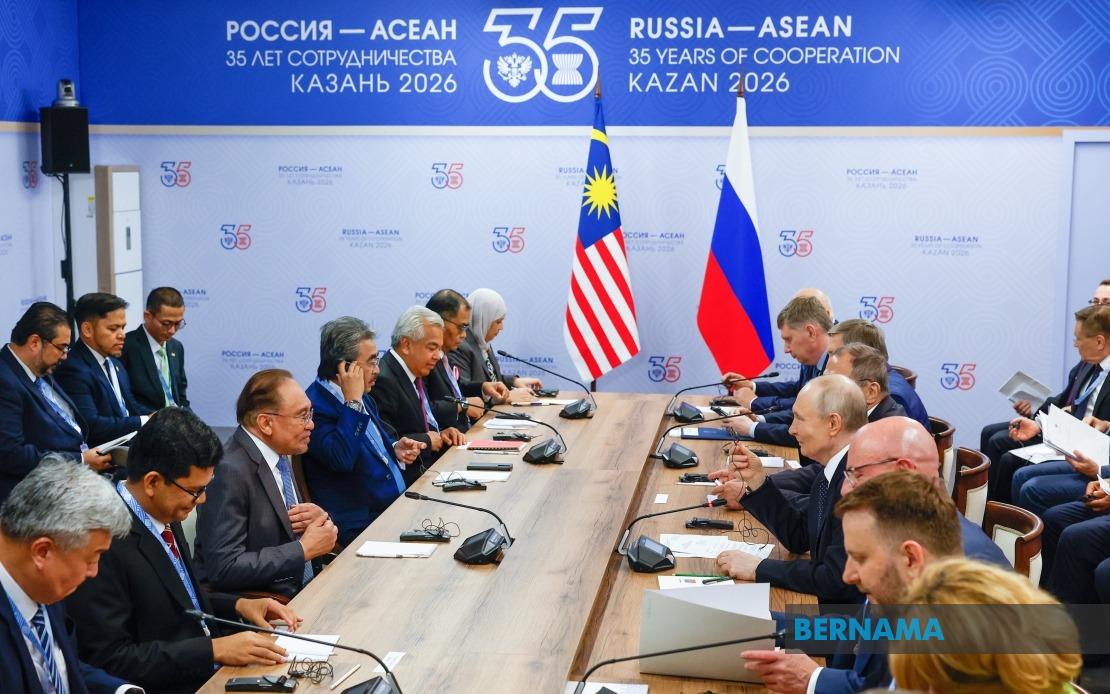
Prime Minister Datuk Seri Anwar Ibrahim has expressed appreciation for the stance taken by Russia and China on Middle Eastern conflicts, particularly their calls for peace and their criticism of actions against civilians in Gaza, Iran and Lebanon. Speaking during an exclusive interview with Russian broadcaster RT on the sidelines of an official visit to Kazan, Anwar highlighted how Malaysia views these positions as aligned with principles of justice and international accountability.
During his attendance at the Commemorative Summit marking 35 years of ASEAN-Russia diplomatic relations, Anwar articulated Malaysia's independent foreign policy approach, emphasising that the country has consistently opposed what it characterises as Israeli aggression while refusing to align automatically with any major power. He noted that Parliament had taken a bipartisan stance on the matter, reflecting broad domestic consensus on the issue and demonstrating that Malaysia's position emerges from internal democratic processes rather than external pressure.
The prime minister outlined his personal diplomatic efforts to broker a fair resolution to the ongoing regional tensions, noting that he has engaged with leaders across the Gulf states, Pakistan, Turkey and Iran as part of these mediation attempts. These wide-ranging consultations underscore Malaysia's ambition to position itself as a bridge-builder in a region increasingly fractured by competing interests and ideological positions. Anwar expressed optimism that such engagement would eventually produce outcomes that address the underlying grievances and restore stability across West Asia.
Crucially, Anwar drew a distinction between Malaysia's actual foreign policy orientation and the concept of neutrality, a semantic distinction that carries significant weight in regional diplomacy. He stressed that Malaysia and ASEAN adopt the principle of "centrality" rather than neutrality, meaning that member states remain committed to independent positions on human rights and humanitarian concerns whilst refusing to subordinate themselves to any particular ideological camp or superpower agenda. This framework allows nations to take decisive stances on issues such as atrocities against civilians without being accused of bias toward any specific bloc.
The prime minister's criticisms targeted what he described as selective application of international norms by Western powers, particularly regarding Israel's military operations. He questioned how major Western nations, including the United States, could simultaneously champion principles of international law and territorial sovereignty whilst appearing to endorse Israeli actions against neighbouring countries. This apparent contradiction, Anwar suggested, undermines the credibility of Western claims to uphold universal standards and damages the international rules-based order that these same powers claim to defend.
Anwar highlighted the broader consequences of what he characterised as hypocritical stances, noting that the ramifications of regional conflicts extend far beyond the immediate theatre, affecting economic stability and international peace more broadly. He emphasised that the issue transcends mere economic hardship resulting from warfare, striking instead at fundamental principles regarding how the international community should respond to aggression and violations of sovereignty. The prime minister's framing positions Malaysia's objections as grounded in principled concerns about the integrity of international law rather than mere partisan positioning.
Addressing Iran specifically, Anwar acknowledged that some commentators might criticise Iran's responses to external pressures, yet he insisted that this should not result in international silence regarding aggression directed toward the country. He pointed out a troubling asymmetry in how Western media and governments respond to different actors in the region, drawing attention to what he sees as a contradiction deserving scrutiny. This observation reflects broader frustrations within the non-aligned movement and across the Global South regarding what many perceive as double standards in Western foreign policy pronouncements.
The prime minister's comments represent a calculated articulation of sentiment widely held across Southeast Asia and the broader developing world, where suspicion of Western motivations in the Middle East remains pronounced. By publicly commending Putin and Xi whilst critiquing Western policy, Anwar positions Malaysia within a coalition of nations advocating for a multipolar international system less dominated by American and European priorities. This rhetorical positioning carries implications for how Malaysia might vote on UN resolutions and participate in international forums addressing Middle Eastern issues.
For Malaysian readers, Anwar's statements reflect the government's broader strategy of maintaining diplomatic flexibility whilst building relationships with rising powers including Russia and China. The emphasis on centrality rather than neutrality attempts to reconcile Malaysia's historical non-aligned tradition with contemporary geopolitical realities where complete non-involvement has become increasingly untenable. This approach seeks to preserve Malaysia's voice in international deliberations whilst avoiding the perception of servility to any single power.
The timing of these remarks during an ASEAN-Russia commemoration event suggests deliberate signalling to both Russia and China regarding Malaysia's willingness to cooperate on Middle Eastern matters despite Western pressure. For ASEAN as a collective body, Anwar's articulation of the centrality principle represents an effort to articulate a common regional position that transcends the different bilateral relationships individual member states maintain with major powers. This remains a persistent challenge for the regional grouping, which has struggled to maintain unity on sensitive geopolitical issues.
Looking forward, Anwar's public commendation of Russian and Chinese positions may influence how Malaysia engages with future Middle Eastern initiatives proposed by these powers, potentially opening space for greater coordination on global governance issues. The emphasis on independent decision-making whilst acknowledging alignment with Russia and China on specific issues suggests Malaysia intends to maintain flexibility to cooperate with various partners depending on circumstances. This pragmatic approach reflects the calculation that Malaysia's interests are best served through engagement with multiple powers rather than commitment to any exclusive partnership.