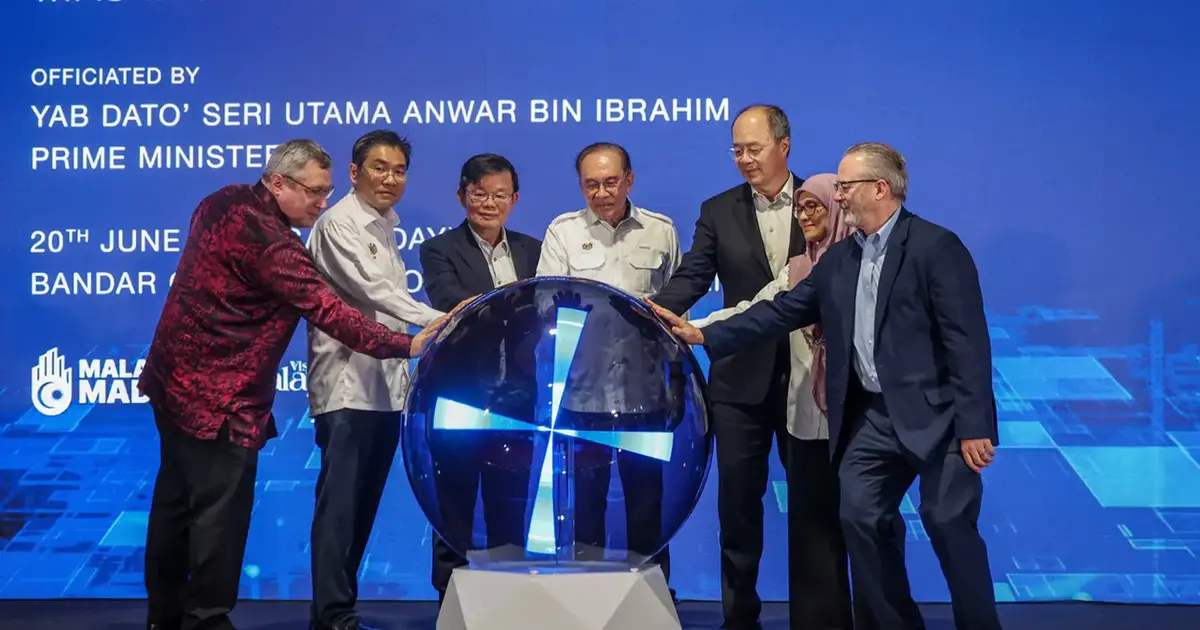
Prime Minister Anwar Ibrahim has moved to strengthen Malaysia's position in the global semiconductor landscape through a strategic appointment designed to foster closer collaboration between the country's leading technology companies and its higher education institutions. The adviser role, unveiled as part of the government's broader push to develop the nation's advanced manufacturing capabilities, signals renewed commitment to bridging the traditional divide between industry and academia in a sector critical to Malaysia's economic future.
The appointment addresses a longstanding challenge in Southeast Asia's technology development: the gap between university research capabilities and commercial semiconductor manufacturing. Malaysia has maintained a substantial presence in semiconductor assembly, testing, and packaging for decades, but the country has struggled to develop a robust ecosystem where academic innovation seamlessly transitions into industrial application. By positioning an adviser directly within the Prime Minister's office to coordinate these efforts, the government aims to create formal mechanisms for knowledge transfer and joint research initiatives that benefit both sectors.
For Malaysian universities, this represents a significant opportunity to position their researchers and facilities as essential partners in the semiconductor value chain. Academic institutions across the region have historically operated at arm's length from major manufacturing facilities, limiting their ability to secure industry funding and shape curriculum around genuine commercial needs. The adviser's mandate to strengthen these connections could unlock substantial research collaborations, internship placements, and technology licensing arrangements that would enhance the financial sustainability of university science and engineering departments while providing students with practical exposure to real-world manufacturing challenges.
The semiconductor industry in Malaysia, comprising both multinational corporations and a growing cadre of domestic technology firms, stands to benefit from more systematic access to university expertise in emerging areas such as artificial intelligence, advanced materials science, and next-generation chip design. As global competition intensifies and production nodes shift toward different geographic regions, Malaysia's ability to innovate locally becomes increasingly important. University-industry partnerships can accelerate the development of high-value-added services that complement Malaysia's existing strength in labour-intensive manufacturing segments.
Anwar's emphasis that the appointment will incur no additional government expenses is strategically significant. This assurance reflects the administration's commitment to fiscal discipline while still advancing developmental priorities—a message particularly important given Malaysia's ongoing fiscal consolidation efforts and public scrutiny of government spending. The adviser likely will be drawn from existing government structures or seconded from industry, with any coordination activities absorbed within current budgets. This approach also demonstrates that progress on semiconductors need not depend on lavish new bureaucratic spending, addressing longstanding concerns about the multiplying cost of government advisory positions.
The timing of this initiative aligns with broader regional trends. Across Southeast Asia, governments and regional organisations increasingly recognise that semiconductor capability represents both economic opportunity and strategic necessity. Vietnam, Thailand, and Indonesia have all launched initiatives to develop their own semiconductor ecosystems, while Singapore strengthens its position as a global chip hub. Malaysia's move to more explicitly leverage its university sector reflects pragmatic recognition that competing in this space requires mobilising all available institutional resources, not merely allocating additional capital to manufacturing facilities.
For Malaysian policymakers, the appointment also signals confidence in the nation's scientific talent pool. Rather than pursuing external expertise exclusively, the government's preference for appointing a domestic adviser suggests faith that Malaysian researchers and administrators possess sufficient understanding of both university systems and semiconductor manufacturing to meaningfully strengthen connections. This approach builds institutional confidence and avoids the perception that Malaysia must rely on overseas consultants for strategic sector development.
The practical implications for students and early-career researchers could prove transformative. Structured collaboration frameworks often result in funded research positions, scholarships targeting specific skills gaps, and guaranteed employment pathways for graduates. Malaysian engineering students positioned within vibrant university-industry partnership networks gain competitive advantages over their regional peers by securing practical training within world-class manufacturing environments. This talent pipeline development becomes particularly crucial as Malaysia seeks to climb the semiconductor value chain toward higher-margin design, software, and advanced engineering services.
However, the success of this initiative ultimately depends on the adviser's ability to navigate divergent institutional priorities. Universities prioritise fundamental research, publication in prestigious journals, and long-term capability building. Semiconductor manufacturers seek rapid solutions to specific production challenges, competitive advantage, and measurable returns on research investment. Bridging these cultures requires diplomatic skill, genuine understanding of both sectors, and sufficient authority to overcome institutional resistance. The adviser's placement within the Prime Minister's office provides necessary political weight, but sustained progress will hinge on whether collaboration mechanisms prove genuinely valuable to both partners rather than bureaucratic exercises.
The announcement also reflects Anwar's government signalling its openness to ecosystem-building approaches within Malaysia's technology sector. Rather than favouring isolated champions or directing massive subsidies toward selected companies, the strategy emphasises systemic strengthening through improved information flows and formalised collaboration. This represents a moderate, institutional approach to industrial development—one that acknowledges Malaysia's existing strengths while recognising that sustained competitiveness requires continual innovation and talent development across institutional boundaries.

