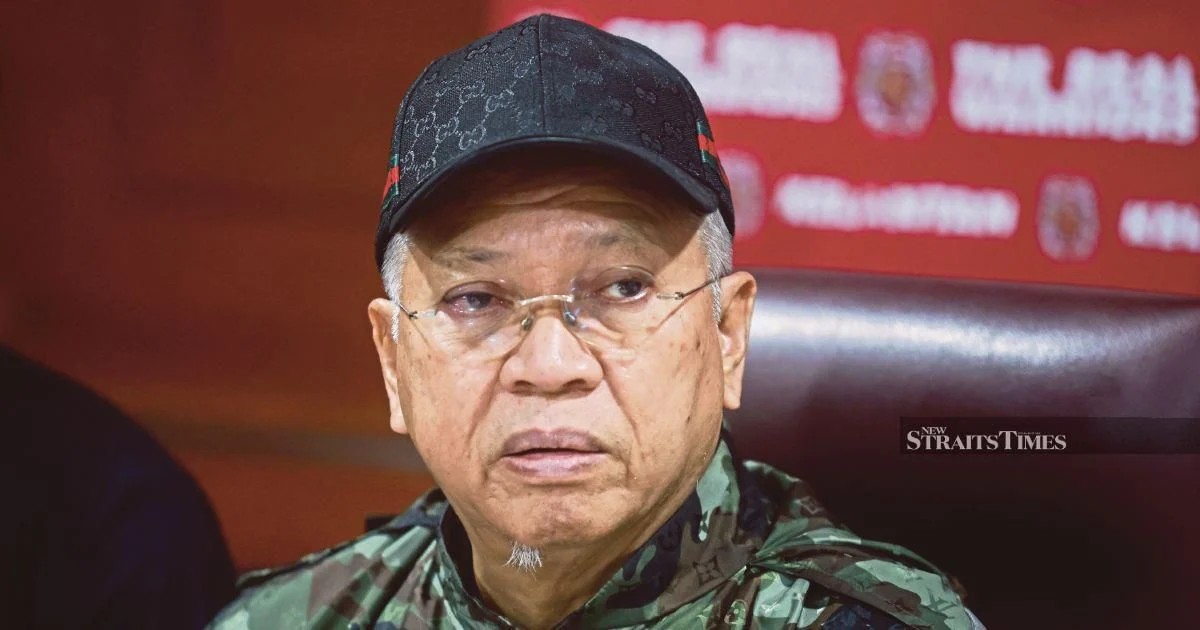
Tan Sri Annuar Musa publicly acknowledged in Kota Baru that his personal interventions to mend strained relations between PAS and competing factions within Bersatu have proven unsuccessful, raising fresh concerns about cohesion within the Perikatan Nasional alliance. The revelation underscores mounting internal discord that has tested the partnership binding these major Malay-Muslim political forces together.
Annuar's candid admission reflects the complexity of managing a coalition comprising parties with differing ideological priorities and power structures. Perikatan Nasional emerged as a significant political force in Malaysian politics, yet the alliance now faces structural vulnerabilities as member parties grapple with their own internal reorganisation and rivalry for influence. The coalition's capacity to present unified governance and electoral strategies depends heavily on resolving these underlying tensions.
PAS, the Islamic political party that has strengthened its parliamentary position in recent years, and Bersatu, which originated as a breakaway faction before establishing itself as an independent political entity, operate under different organisational cultures and strategic objectives. These fundamental differences have manifested in disagreements over policy direction, resource allocation, and representation within governing structures, making reconciliation efforts particularly challenging.
The failure of such high-level mediation attempts suggests that the underlying issues dividing these parties extend beyond superficial political disagreements. Rather, they appear rooted in structural asymmetries and competing visions for the coalition's future trajectory. When senior figures like Annuar, who holds significant influence within Perikatan Nasional circles, find themselves unable to broker compromise, it signals that the problems run deeper than procedural or administrative disputes.
For Malaysian political observers and constituents, these divisions carry immediate implications. Coalition stability directly affects governmental effectiveness, legislative agenda-setting, and the ability to deliver on promises to voters. Internal friction within Perikatan Nasional could translate into delayed policy implementation, incoherent messaging to the public, and reduced legislative productivity when the coalition controls substantial parliamentary representation. Regional governments where Perikatan Nasional holds sway may experience governance delays as party factions engage in internal negotiations rather than focusing on development priorities.
The broader Southeast Asian context makes Perikatan Nasional's struggles particularly noteworthy. Malaysian coalition politics often serve as a model and cautionary tale for neighbouring nations managing multi-party arrangements. The difficulties in maintaining alliance discipline without resorting to authoritarian control methods demonstrate how democratic systems must balance party autonomy with collective governance responsibilities. Analysts across the region watch such developments closely, as they illuminate enduring challenges in sustaining complex political coalitions.
Annuar's disclosure also reflects strategic considerations about timing and public messaging. By admitting the failed reconciliation attempts rather than concealing them, the coalition risks acknowledging weakness to political opponents while attempting to appear transparent and committed to institutional health. This calculated vulnerability may represent an effort to signal continued dedication to unity despite setbacks, or it might indicate that leadership believes the situation has deteriorated beyond the point where confidential negotiations remain viable.
The implications for Perikatan Nasional's electoral prospects warrant consideration. Voters evaluating coalition performance will factor in internal dysfunction when assessing whether the alliance merits continued support. Political competitors will exploit visible divisions to suggest governance instability. Meanwhile, parties within the coalition must calculate whether remaining together provides greater collective advantage than pursuing separate electoral strategies, particularly as coalition members hold varying levels of electoral strength across different geographic constituencies.
Moving forward, Perikatan Nasional faces critical decisions about institutional design. The coalition might establish formal mediation mechanisms with clearer dispute-resolution procedures, or it might accept a degree of functional autonomy among member parties while maintaining electoral cooperation. Some coalitions survive through explicit acknowledgment of member diversity rather than attempting to enforce uniform positions on all matters. The Malaysian coalition's historical precedents offer both successful models of managing internal differences and cautionary examples of fragmentation.
The unsuccessful reconciliation attempts also underscore the personal and political capital expended when senior figures engage in mediation without achieving results. Annuar's willingness to invest time and credibility in these efforts, despite their failure, demonstrates commitment to preserving the coalition even when success appears unlikely. Whether such continued effort proves sustainable remains an open question, particularly if divisive issues resurface repeatedly without genuine resolution mechanisms in place.
Looking at electoral cycles and parliamentary dynamics, Perikatan Nasional cannot afford prolonged internal discord. Other political formations remain positioned to capitalise on any coalition weakness or fragmentation. The window for genuine reconciliation and structural reform remains open, but it will inevitably close if fundamental disagreements continue unresolved and factional competition intensifies within individual member parties.

