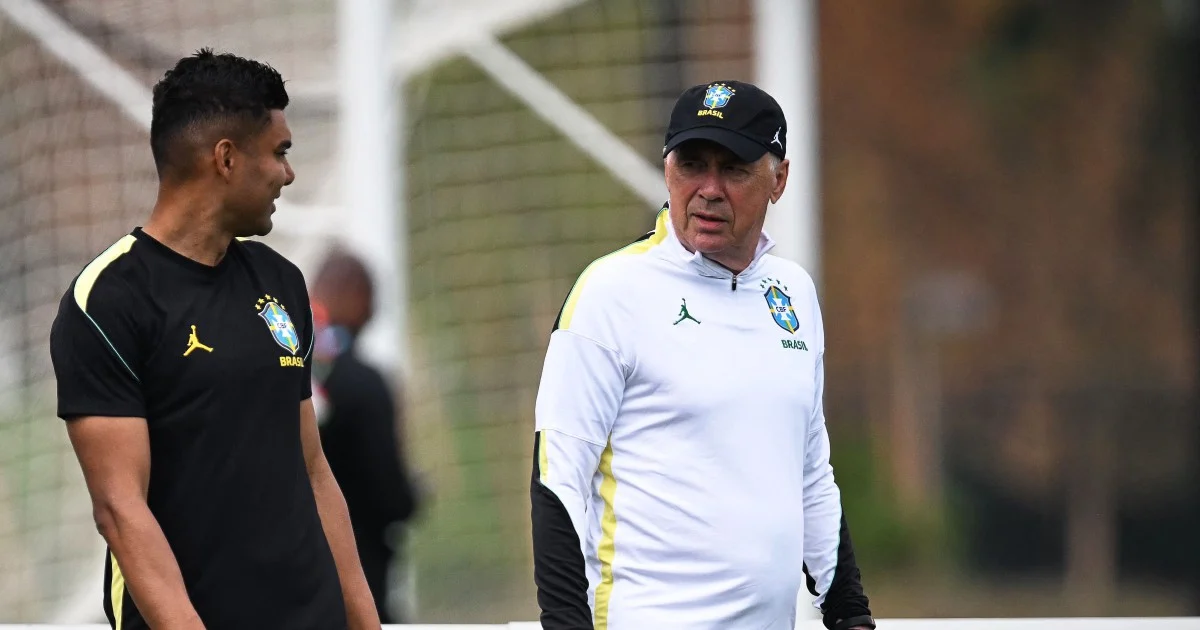
Brazil's World Cup campaign opened with far less sparkle than the five-time champions might have hoped, but head coach Carlo Ancelotti is choosing perspective over panic as his squad prepares for Friday's Group C encounter with Haiti in Philadelphia. The experienced Italian tactician believes the 1-1 draw against Morocco, while disappointing in its execution, provides a valuable diagnostic opportunity rather than cause for alarm bells. With a demanding fixture against Haiti on the immediate horizon, Ancelotti sees the chance to systematically address the vulnerabilities that emerged during the opening contest.
The stalemate with Morocco exposed areas where Brazil's typically fluid attacking play and defensive solidity both fell short of their customary standards. Rather than view this as a crisis point, Ancelotti frames the fixture as a moment for recalibration—a chance to test solutions in real match conditions before the group stage intensifies. In international football's compressed tournament schedule, a match against a lower-ranked opponent can serve as both a necessary points haul and a genuine testing ground for tactical adjustments that a head coach wishes to implement.
Ancelotti's composure reflects his extensive experience managing elite clubs and international sides. Throughout his career, he has encountered setbacks during tournament openings and knows that group stage matches offer multiple opportunities for redemption. The Morocco result, while frustrating, leaves Brazil still in contention across all their remaining group assignments. This mathematical reality supports his measured demeanour and suggests that panic would be premature at this stage of the competition.
Brazil's squad possesses considerable quality across all departments—attack, midfield, and defence—but the opening performance suggested that cohesion and rhythm remain works in progress. Haiti, by contrast, enters as heavy underdogs with limited resources compared to the Brazilian juggernaut. For Ancelotti, the tactical challenge becomes deploying his team in ways that restore confidence and fluidity without allowing complacency to creep in.
The coach will likely use this match to experiment with aspects of his team's play while maintaining the fundamental quality required to secure a comfortable victory. Defensive shape can be tested, attacking patterns refined, and individual players given opportunities to make their case for extended minutes in crucial later fixtures. This philosophy has served many successful managers well—understanding that World Cup group stages function as extended training sessions with genuine stakes.
Brazil's attacking potential remains formidable, with several world-class players capable of producing moments of brilliance. The Morocco draw demonstrated that they can create opportunities; the issue lies in their clinical finishing and the defensive structure that left gaps for Morocco to exploit. These are correctable issues that honest analysis and focused practice can address. Friday provides the laboratory in which those corrections can be tested.
From a broader perspective, the Haiti match also offers Ancelotti a chance to evaluate squad depth and provide game time to players who may not feature prominently if Brazil progresses to the knockout stage. Tournament football at the highest level demands that coaches manage their squads carefully, rotating players while maintaining competitiveness. A commanding performance against Haiti could allow several squad players to bank meaningful minutes while the starting XI gains rhythm and confidence.
The psychological dimension of Ancelotti's calm approach matters significantly. When a head coach projects composure after a setback, that message ripples through the squad and the broader public narrative. His demeanour signals that one draw does not define a campaign and that opportunities remain abundant. This stabilising influence is particularly valuable in tournament environments where emotional swings can destabilise teams.
For Malaysian and Southeast Asian observers, the Brazil versus Haiti fixture represents a crucial inflection point in the tournament. Brazil remains a barometer for global football quality, and how they respond to their opening draw provides insight into which teams will thrive in the later stages. Additionally, the match demonstrates how elite coaches approach tournament management—not with reactive panic but with strategic vision spanning multiple matches. Ancelotti's measured response to the Morocco stalemate embodies the methodical approach that characterises successful international football management in modern tournaments.

