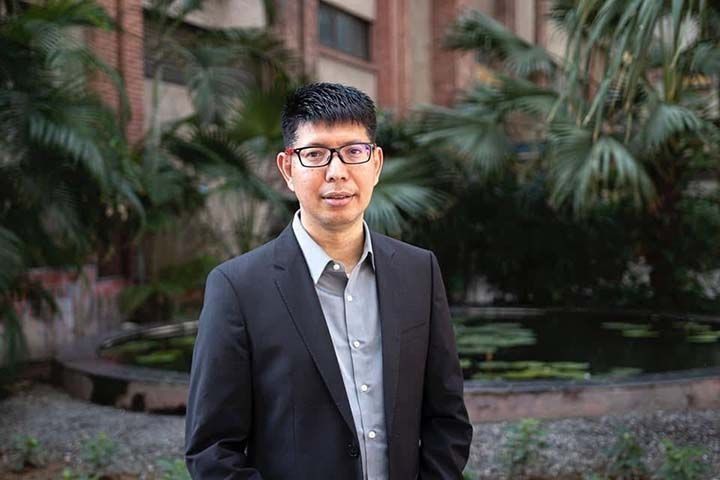
Min Zin, the executive director of the Institute for Strategy and Policy (ISP) - Myanmar, remains in detention in Kunming after his arrest on June 3, with his organisation and the United States government disputing Chinese authorities' characterisation of his activities as espionage. The scholar had travelled to the southwestern Chinese city specifically to participate in an academic workshop, according to a statement released by ISP-Myanmar on Wednesday, June 17, which called for his unconditional release and rejected what the think tank described as baseless allegations relating to national security.
China's foreign ministry had formally confirmed Min Zin's detention the previous week, asserting that he was suspected of engaging in spying activities and jeopardising China's security interests. However, the timing and circumstances of the arrest have raised questions about potential political dimensions, coming as it did in the weeks leading up to Myanmar's junta chief-turned-president Min Aung Hlaing's scheduled five-day state visit to Beijing. The detention reflects deepening complexities in the relationship between China and Myanmar's military government, even as Beijing remains one of the most strategically important international partners for the Myanmar armed forces.
The United States has moved swiftly to address the case through diplomatic channels. A spokesperson for the US State Department stated that American consular officers have already visited Min Zin and that the department is actively engaged with Chinese officials to secure his release while providing all appropriate consular support. The State Department explicitly rejected the espionage allegations, signalling that Washington views the charges as politically motivated rather than substantiated.
Min Zin's background underscores his legitimate credentials as a scholar and research professional rather than any clandestine operative. He is a former student activist who participated directly in Myanmar's 1988 democracy movement, which challenged the military's iron grip on power before being brutally suppressed. He subsequently pursued advanced studies in political science at the University of California, Berkeley, equipping himself with rigorous academic training and international exposure that positioned him as a credible voice on Myanmar affairs.
The Institute for Strategy and Policy, which Min Zin helped establish, has become an increasingly important source of independent research and analysis on Myanmar's political trajectory since the February 2021 military coup that toppled the elected government of Aung San Suu Kyi. Initially headquartered inside Myanmar, the organisation relocated its operations abroad following the coup, reflecting the deteriorating security environment for independent researchers and civil society organisations within the country. From its new base outside Myanmar, ISP has maintained its focus on documenting and analysing the country's multifaceted crises.
The institute's research agenda touches directly on issues of vital concern to China and the broader region. Its publications have examined the armed conflict that erupted following the coup, when nationwide pro-democracy protests transformed into an organised resistance involving newly formed rebel groups aligned with longstanding ethnic armed organisations that have long challenged central government control. ISP has also analysed Myanmar's deteriorating economic situation, trade dynamics, and crucially, the bilateral relationship between Naypyidaw and Beijing—a relationship that Beijing clearly views as sensitive enough to warrant police action against independent analysts.
This incident illuminates the tension between academic freedom and state security concerns as defined by authoritarian governments. ISP-Myanmar's statement emphasised that research institutions must operate without intimidation or harassment, a principle that reflects international norms around scholarly independence. The arrest of a think tank director attending a conference represents precisely the kind of chilling effect on academic discourse that organisations focused on governance and conflict resolution view with deep concern.
The detention also exposes potential friction within the China-Myanmar relationship despite their strategic alignment. While China has been instrumental in supporting Myanmar's military government diplomatically and economically, Beijing's arrest of an American analyst researching Myanmar suggests that China may harbour suspicions about foreign scholarly networks operating in and around Myanmar. This could indicate Chinese concerns about the extent to which independent research communities might be gathering sensitive information or coordinating with intelligence services.
For Southeast Asian observers and policymakers, the case demonstrates how geopolitical competition and regional tensions can impact academic freedom and international cooperation on research matters. Myanmar's ongoing crisis has attracted significant scholarly attention from universities and think tanks across the West, and this detention sends a signal that researchers working on Myanmar should exercise caution when travelling to China or engaging with Chinese institutions. The implications extend beyond Min Zin's individual case to affect how research on Myanmar's conflict and China's role in the region gets conducted.
The coming weeks will likely prove crucial in determining whether diplomatic pressure from the United States succeeds in securing Min Zin's release. China's insistence that it will handle the case according to law suggests the country may be prepared for a prolonged detention, possibly as leverage in broader diplomatic negotiations or as a demonstration to its own security apparatus that it takes threats to national security seriously, however tenuously such allegations may be founded. The resolution of this case will send important signals about the operating space for independent research on Myanmar and about the boundaries of academic freedom in relation to China's security preoccupations.
For Myanmar analysts and international research communities focused on the country's political transition, this incident underscores the precarious position of independent scholarship in an era of intensifying great power competition in Southeast Asia. The detention of Min Zin, a legitimately credentialed scholar attending a standard academic workshop, demonstrates how quickly researchers can become caught in geopolitical crosscurrents when their work touches on sensitive bilateral relationships or regional security matters. The international community's response—whether through sustained diplomatic pressure or other channels—will influence whether researchers can continue documenting and analysing Myanmar's crisis without fear of arbitrary detention.

