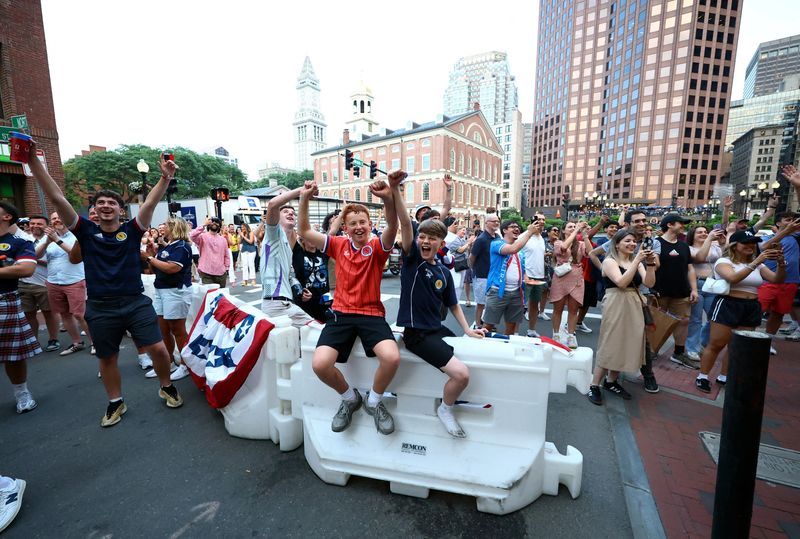
The 2026 World Cup co-hosted across North America is becoming an unlikely vehicle for rebranding the United States among international audiences. When the tournament was announced, global football fans harboured substantial reservations about visiting the country, citing concerns ranging from visa complications and elevated ticket prices to perceptions of gun violence and limited local enthusiasm for the sport. However, as matches have commenced and thousands of supporters from across the globe have descended on American cities, social media testimonies reveal a markedly different narrative emerging from first-time visitors discovering unexpected warmth and hospitality.
The transformation is rooted in everyday interactions that transcend the typical tourist experience. Scottish supporters, known colloquially as the Tartan Army, have become ambassadors for American friendliness, sharing stories of spontaneous kindness from locals in Boston pubs and casual encounters that felt genuinely welcoming rather than transactional. Swiss visitors posting on international forums emphasise the outgoing nature of Americans they have met, while fans from across Europe describe a cultural generosity embodied in practices like complimentary soft drink refills and casual social engagement that contrasts sharply with their initial expectations.
Sports industry experts recognise the strategic significance of these interpersonal moments. According to Darin White, founder of the Sports Industry Program at Samford University in Alabama and a former soccer coach, major sporting events function analogously to the front entrance of a residence—they represent the first substantive and emotionally resonant impression visitors acquire of a place they might otherwise never seriously contemplate. This framing elevates the World Cup beyond athletic competition into a nation-building exercise with genuine diplomatic implications. Academic research substantiates that hosting premier international competitions can durably alter deeply ingrained stereotypes and reshape how foreign populations perceive host nations.
What distinguishes this particular tournament is its geographic distribution across secondary and tertiary American markets rather than concentration in traditional tourist epicentres. While previous World Cups might have funnelled visitors exclusively through New York, Los Angeles, and Orlando, the 2026 structure exposes international audiences to Kansas City, Atlanta, Houston, Dallas, and Seattle. This dispersal creates encounters between global visitors and Americans in communities where such interactions occur infrequently, often generating particularly authentic exchanges of cultural appreciation.
These smaller cities have become laboratories for cross-cultural culinary diplomacy. In Kansas City, Argentine supporters—for whom asado barbecue represents a cultural cornerstone nearly equivalent to football itself—have discovered and embraced the local dry-rub grilling methodology. Visiting fans like Cristian Gastes acknowledge that while Argentine-style barbecue remains their preference, the regional American variant possesses genuine merit and authenticity. Similarly, German supporters in Dallas have ventured beyond stadium precincts to sample Texan barbecue and procure authentic cowboy hats, with visitors explicitly expressing intentions to deepen their engagement with regional culture.
White emphasises that the most consequential brand-building moments often escape media attention entirely. A Moroccan supporter receiving navigation assistance from a stranger in Dallas, or a German family obtaining directions from a Seattleite, generates no headlines yet conducts substantial work rehabilitating what he characterises as Brand USA. These unrecorded instances of generosity and civic engagement accumulate into a collective impression substantially divergent from the confrontational governmental posturing and protectionist rhetoric that dominated international perceptions in preceding years. The informal American hospitality economy—characterised by service workers, stadium personnel, and chance acquaintances—is inadvertently countering diplomatic friction.
Yet significant impediments persist. Climatic challenges, particularly in Miami and other southern venues, tax both athletes and supporters, with the championship match scheduled for late summer amplifying heat-related concerns. More structurally, FIFA reports robust attendance while simultaneously acknowledging that elevated accommodation and transportation expenses have deterred substantial segments of international fandom. These economic barriers disproportionately affect supporters from lower-income nations, creating incomplete representation at matches.
Visa access restrictions represent perhaps the most consequential barrier to genuinely inclusive cultural exchange. Citizens from four participating nations—Iran, Haiti, Ivory Coast, and Senegal—encounter complete or partial entry prohibitions that prevent their presence at matches despite having ancestral or diaspora communities within the United States. While Iran and Haiti maintain substantial American diaspora populations capable of supporting their teams, Ivory Coast and Senegal possess only minimal established communities. This exclusion creates a painful paradox wherein the tournament ostensibly celebrates global unity while administratively enforcing selective participation based on nationality.
Nevertheless, American supporters from diaspora backgrounds have filled certain voids, creating alternative forms of belonging. Brooklyn resident Jessica Ambres, wearing Senegal colours at a match in New Jersey, described feeling profound connection to African diaspora identity as a Black American, transforming her stadium presence into an act of solidarity transcending conventional fan allegiances. Across multiple venues, American crowds have demonstrated enthusiasm extending beyond support for their home nation or ancestral countries, instead rallying behind underdog nations and teams lacking substantial American fan bases. This inclusive spectating behaviour itself signals shifting perceptions of football as democratically accessible rather than culturally foreign.
Local political and commercial leadership explicitly recognises the tournament's reputational value. Boston Mayor Michelle Wu extended invitations to Scottish supporters not merely for the duration of matches but as permanent inhabitants, explicitly framing American cities as welcoming homes for international visitors. Such rhetoric, when combined with demonstrated authentic hospitality, begins constructing enduring narratives about American identity that transcend government messaging.
The 2026 World Cup's ultimate legacy may depend less on final scores than on whether these ephemeral encounters crystallise into sustained perceptual shifts. If international visitors retain memories of exceptional American kindness and return home as storytellers recounting positive experiences, the tournament could accomplish something that official diplomatic initiatives frequently cannot—a genuine recalibration of how foreign populations understand and relate to the United States.

