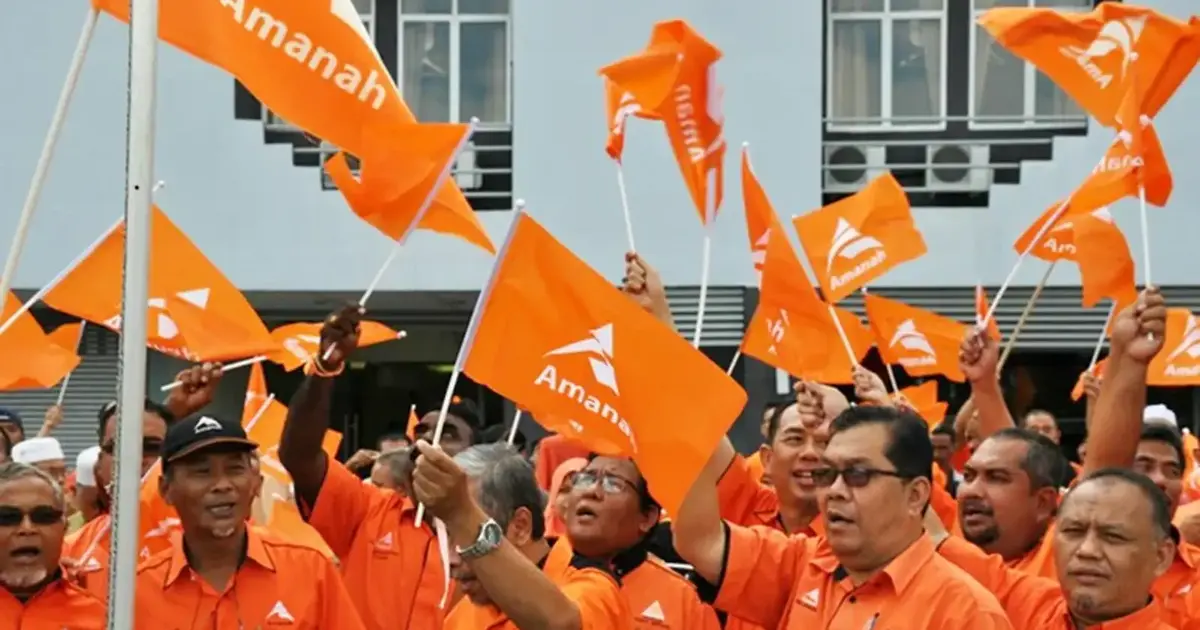
The political dynamics within Pakatan Harapan took a clearer shape on Tuesday when Amanah signalled its willingness to defer to the coalition's broader strategy on seat allocation ahead of the Johor state election. Amanah secretary-general Faiz Fadzil underscored that internal coalition considerations, while important, must take a back seat to the overarching objective of maximising opposition gains across the state legislature.
Faiz Fadzil's statement represents a significant moment in the ongoing negotiations between PH's component parties over seat distribution in Johor, a state that has been a political battleground between competing coalitions in recent years. The comment emerged amid speculation over which party would contest the Puteri Wangsa state seat, a constituency that carries symbolic weight within the opposition's broader strategy for the state. By explicitly stating that Amanah would accept whatever decision the coalition reaches, the party has essentially removed itself as a potential obstacle to PH's unified campaign planning.
The emphasis on winning the maximum number of seats reflects a hardened reality facing Malaysia's opposition: in a fragmented political landscape, unity of purpose often matters more than individual party interests. Johor has proven to be a particularly complex electoral terrain, where vote-splitting between opposition candidates has historically benefited the ruling coalition. The Puteri Wangsa decision, therefore, carries implications that extend beyond a single constituency, touching on the broader credibility of PH as a disciplined and strategic political force.
Amanah's positioning is particularly significant given its role as a relative newcomer within PH's structure. The party, which split from the Malaysian Islamic Party (PAS) in 2015, has worked to establish itself as a moderate Islamic alternative within the opposition framework. By demonstrating flexibility on seat allocation, Amanah is signalling its commitment to the coalition while also avoiding the perception that it prioritises narrow party gains over collective electoral prospects. This approach strengthens its standing with larger coalition partners like Anwar Ibrahim's People's Justice Party (PKR) and the Democratic Action Party (DAP).
The Johor state election represents a critical test for PH's stability and electoral viability. The coalition has faced considerable challenges in recent years, including internal tensions over seat distribution and policy direction. State-level elections, in particular, have become proving grounds for whether the opposition can maintain cohesion when confronted with the temptation to maximise individual party representation. Amanah's declaration that it will abide by the coalition's decision on Puteri Wangsa therefore carries weight as an indicator of whether lessons from previous electoral disappointments have taken root.
For Malaysian voters watching this develop, the message is mixed. On one hand, Amanah's willingness to accept coalition discipline suggests that PH has matured in its appreciation for strategic coordination. On the other, the need for such explicit reassurance underscores the fragility of opposition unity and the constant negotiations required to keep coalition partners aligned. These behind-the-scenes discussions, while sometimes invisible to the general public, fundamentally shape the electoral prospects that voters face when they enter polling booths.
The Johor context also matters deeply for national politics. Johor remains one of Malaysia's largest states by population and economic output, and its legislative composition influences perceptions of which coalition commands genuine grassroots support. An effective PH performance in Johor would bolster the opposition's narrative of recovery and relevance at a time when internal divisions have prompted questions about the coalition's long-term viability. Conversely, another disappointing result would likely trigger fresh speculation about whether PH can sustain itself as a credible alternative government.
Faiz Fadzil's statement also reflects Amanah's understanding of its position within the broader Malaysian political ecosystem. As a moderate Islamic party, Amanah occupies a complicated space that requires it to demonstrate both principled independence and reliable coalition membership. Too much assertiveness on seat allocation risks alienating DAP and other secular-oriented partners; too much deference risks weakening Amanah's standing with its own grassroots supporters, particularly in constituencies where the party might harbour genuine aspirations.
Moving forward, the test of this declared unity will come in the actual conduct of the campaign. Coalition discipline at the leadership level does not always translate seamlessly into disciplined campaigning at the ground level, where local party branches and candidates may harbour their own ambitions and grievances over seat allocation. Ensuring that Amanah members, despite accepting the coalition's decision on Puteri Wangsa, fully mobilise their organisational machinery and volunteer networks requires more than statements from the party leadership. It demands sustained communication and trust-building throughout the campaign period.
The broader implications for Southeast Asia's opposition movements are worth noting. Malaysia's experience with multi-party coalitions offers lessons relevant to neighbouring democracies grappling with their own fragmented political landscapes. How effectively PH can manage internal tensions while maintaining electoral competitiveness becomes a case study in whether ideologically diverse parties can genuinely cooperate for extended periods. Amanah's position on Puteri Wangsa, therefore, extends beyond state-level politics to touch on fundamental questions about the viability of broad-based opposition coalitions in contemporary Southeast Asia.

