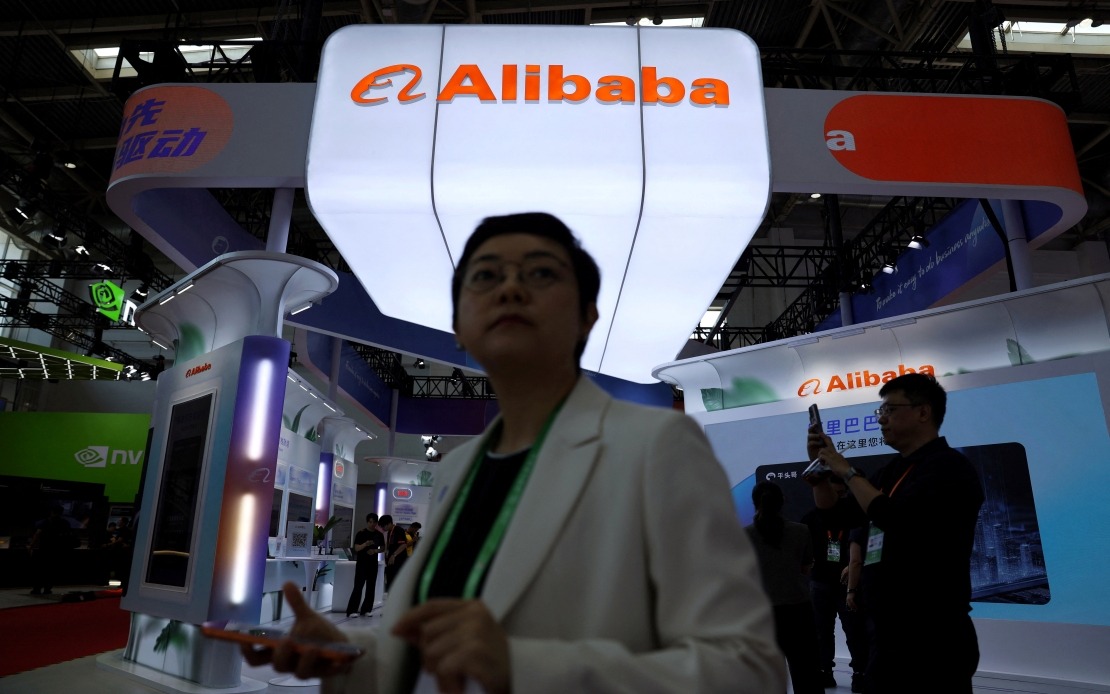
Alibaba, China's dominant e-commerce and technology conglomerate, has launched a legal challenge against the United States Department of Defense following its controversial classification as a military-industrial entity. The lawsuit, filed in federal court and disclosed on Tuesday, represents a significant escalation in tensions between American regulators and major Chinese technology firms over national security concerns that have intensified over the past decade.
The Pentagon's decision, announced earlier in June, expanded its roster of Chinese companies deemed connected to the country's military-industrial apparatus to include 188 entities. Alongside Alibaba, the list encompassed Tencent Holdings, one of Asia's largest gaming and social media companies, and BYD, the world's leading manufacturer of electric vehicles and batteries. This designation carries substantial commercial consequences, effectively restricting American investment in these firms and complicating their access to US capital markets and technology partnerships.
Alibaba's legal filing directly contests the factual and legal underpinnings of the Pentagon's determination, asserting that the classification rests on unfounded assumptions. The company emphasises that its governance structure remains independent from state or military interference, with board members having no connections to China's armed forces or defence establishment. This governance argument addresses a core concern underlying the Pentagon's designation—that Chinese companies ultimately answer to Communist Party directives rather than commercial imperatives.
The tech giant further contends that its entire business portfolio—spanning retail e-commerce, logistics networks, and enterprise cloud services—operates exclusively within civilian sectors. Alibaba argues that its commercial infrastructure supports businesses and consumers rather than serving defence or military applications. The company notes that explicit contractual provisions and internal compliance frameworks prohibit any military deployment of its systems, suggesting that regulatory concerns are disconnected from operational reality.
Alibaba additionally highlights its lack of military certifications or licences as evidence contradicting the Pentagon's characterisation. The absence of formal defence-sector authorisation typically signals limited involvement in classified government contracts or weapons development. This technical distinction gains importance because actual defence contractors routinely maintain security clearances, undergo military audits, and hold specialised certifications demonstrating their integration into national defence supply chains.
The legal challenge reflects mounting friction between Washington and Beijing over technology governance and national security. American policymakers have grown increasingly concerned that major Chinese technology firms may be compelled to share user data, infrastructure access, or technological capabilities with Chinese intelligence services under the country's national security laws. These anxieties extend beyond traditional defence contractors to encompass companies controlling vast data repositories, telecommunications networks, and cloud computing infrastructure.
For Malaysian and Southeast Asian readers, this dispute carries significant implications. Many regional companies rely on Alibaba's cloud services, e-commerce platforms, and logistics networks as critical business infrastructure. Any disruption to Alibaba's operations stemming from American sanctions could ripple through supply chains and digital economies across Southeast Asia. Additionally, the broader pattern of American restrictions on Chinese technology firms creates pressure on smaller nations to choose technology partners, potentially fragmenting the regional digital ecosystem.
The Pentagon's designation methodology remains opaque, raising questions about transparency and due process that resonate beyond this particular case. Chinese companies have limited ability to contest determinations before restrictions take effect, and the criteria distinguishing legitimate commercial enterprises from military-connected entities remain poorly defined. This asymmetry frustrates both companies facing restrictions and countries concerned about predictability in technology governance.
Alibaba's lawsuit signals the company's willingness to engage American legal mechanisms to defend its commercial interests and reputation. Success would require convincing federal judges that the Pentagon exceeded its authority or acted without factual support. However, courts typically defer to executive branch determinations on national security matters, establishing a high bar for corporate challenges. Precedent suggests that even well-resourced companies rarely overturn such designations through litigation alone.
The case also highlights the escalating weaponisation of investment restrictions in US-China relations. Rather than targeting companies directly involved in weapons development, American policy increasingly encompasses broad categories of technology firms deemed strategically important. This approach reflects underlying anxieties about technological competition and geopolitical rivalry that transcend traditional national security frameworks.
The outcome will test how American courts balance national security prerogatives against corporate due process rights during an era of deepening US-China rivalry. Beyond legal proceedings, the designation underscores the fragmenting technological landscape dividing the world into American-aligned and Chinese-aligned spheres. For companies and countries navigating between these poles, neutrality grows increasingly difficult, with consequences extending throughout regional economies dependent on both ecosystems.
Alibaba's challenge arrives amid broader restructuring of global technology relationships, as Western governments reassess vulnerabilities exposed by overreliance on Chinese manufacturing and digital infrastructure. The firm's legal strategy reflects confidence that American courts provide a forum for legitimate grievance, distinguishing between political designations and judicially sustainable restrictions. Whether this confidence proves justified will influence how Chinese technology companies respond to future regulatory actions.

