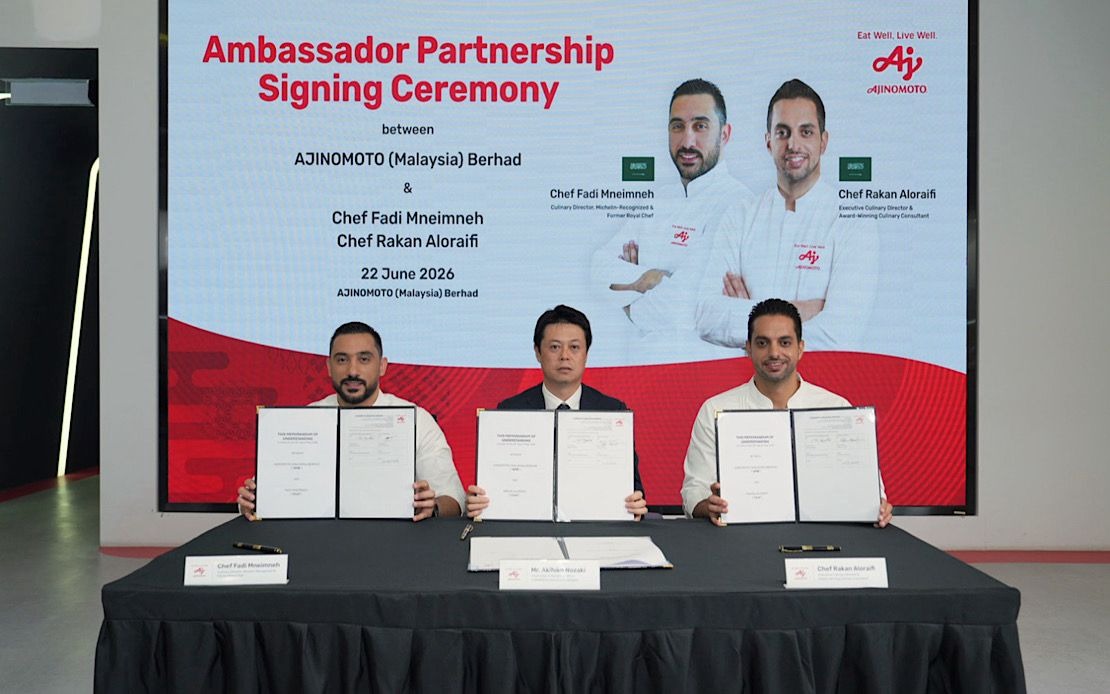
Ajinomoto (Malaysia) Berhad (AMB) is strategically positioning itself to capture greater market share in the Middle East by forging a partnership with two of Saudi Arabia's most respected culinary leaders, Chef Fadi Mneimneh and Chef Rakan Aloraifi. This collaboration marks a deliberate move to capitalise on surging demand for premium halal food products throughout the Arabian Peninsula and wider Middle Eastern region, where consumer spending on authenticated halal goods continues to rise sharply.
The Malaysian multinational food company invited both chefs to its manufacturing headquarters at Bandar Enstek in Negeri Sembilan, where they participated in comprehensive sessions designed to familiarise them with AMB's production standards, product range, and halal certification protocols. During these visits, the chefs gained direct insight into the company's commitment to quality assurance and the scientific foundations underlying umami—the fifth taste sensation that Japanese food science emphasises—and how this principle translates across diverse culinary traditions.
Chef Fadi brings exceptional credentials to the partnership as a Michelin-starred culinary director with previous experience serving at the royal household, while Chef Rakan is an award-winning executive director and prominent culinary consultant whose networks span the hospitality and food service sectors throughout the Middle East. Both individuals command significant influence among restaurants, hotels, catering operations, and food procurement specialists across Saudi Arabia and neighbouring markets, making them invaluable ambassadors for brand positioning.
The strategic rationale behind engaging these culinary influencers extends beyond simple product endorsement. By partnering with respected figures who understand local palates, cultural food traditions, and the stringent halal requirements that govern purchasing decisions across the region, AMB gains credibility and insider knowledge that foreign companies typically lack. These partnerships allow the company to navigate the distinct preferences and regulatory landscapes of Middle Eastern markets with greater nuance and authenticity.
A defining moment during the engagement involved live culinary demonstrations where Chef Fadi and Chef Rakan prepared signature Middle Eastern dishes incorporating selected Ajinomoto products. These sessions illustrated a critical business insight: umami-enhanced seasonings can deepen and enrich authentic regional flavours without diluting or compromising traditional recipes. This positioning—that umami represents a culinary technique compatible with heritage cooking rather than a foreign imposition—addresses potential consumer resistance and opens pathways for product adoption among discerning chefs and home cooks alike.
The programme also facilitated valuable networking opportunities, with participation from AMB's Brunei distributor representative expanding the collaborative circle beyond Saudi Arabia alone. These connections plant seeds for broader Southeast Asian-Middle Eastern trade relationships, potentially creating supply chain synergies and market intelligence sharing among regional partners. For Malaysian exporters seeking to expand eastward or consolidate existing Middle Eastern presence, such distributor participation underscores the importance of cultivating multi-country networks simultaneously.
AMB's initiative reflects a broader strategic imperative: as the global halal market expands, Malaysian companies possess inherent advantages through established certification frameworks, manufacturing expertise, and cultural-religious alignment. Yet translating these advantages into commercial success requires sustained engagement with influential local stakeholders who can vouch for product quality and appropriateness. The partnership model AMB has adopted—investing in chef education, factory transparency, and collaborative culinary innovation—represents a sophisticated approach to market entry that transcends conventional advertising.
The company has already committed to expanded engagement at the Hotel, Restaurant and Café (HORECA) event tentatively scheduled for early October 2026 across Riyadh and Jeddah. These trade shows represent crucial platforms where Chef Fadi and Chef Rakan will conduct live demonstrations for hospitality professionals, executive chefs, and procurement decision-makers. Such venues are typically where bulk purchasing commitments originate and where product preferences trickle down to consumer level through restaurant menus and food service establishments.
From a Malaysian economic perspective, this expansion strategy exemplifies how domestic manufacturers can leverage halal certification—a distinctive national asset—as a springboard for global competitiveness. The Middle East, representing one of the world's most sophisticated and affluent consumer markets for halal products, presents substantial growth opportunities for companies that combine technical food expertise with cultural sensitivity and relationship-based marketing. AMB's success in this space could inspire other Malaysian food companies to adopt similar partnership models rather than relying solely on price competition or generic promotional campaigns.
The broader context includes recognition that halal food markets are becoming increasingly premium-focused. Middle Eastern consumers, particularly in Saudi Arabia's rapidly modernising food service sector, are willing to invest in products that marry quality, authenticity, and convenience. AMB's positioning of umami as a scientific principle that enhances rather than replaces traditional cooking aligns perfectly with this affluent consumer segment's values—they seek innovation that respects heritage, not disrupts it.
Looking forward, the success of this partnership framework will likely determine whether AMB expands similar collaborations across other Gulf Cooperation Council nations or extends the model into different product categories. Should Chef Fadi and Chef Rakan successfully introduce Ajinomoto products into prestigious hotels, restaurants, and catering operations throughout Saudi Arabia, the resulting market penetration could substantially exceed what conventional B2B sales approaches might achieve. The demonstration effect—seeing respected chefs incorporate these products into their signature offerings—carries measurable commercial weight in markets where personal reputation and expert endorsement strongly influence purchasing decisions.

