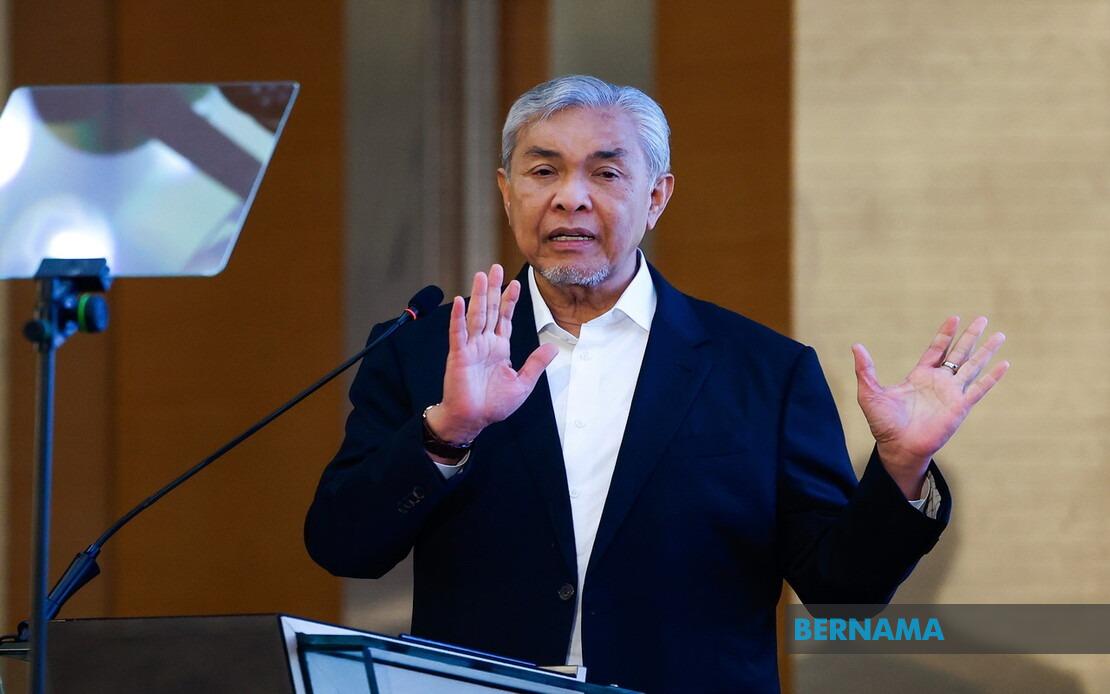
Deputy Prime Minister Datuk Seri Dr Ahmad Zahid Hamidi has reiterated the importance of honouring the institution of the Malay Rulers as political parties gear up for the Negeri Sembilan state election, urging them to steer clear of contentious race, religion and royalty issues throughout the campaign period. Speaking at an event in Seremban on July 27, Ahmad Zahid emphasised that the reminder issued by the Negeri Sembilan Palace should be treated with the utmost seriousness by all contesting coalitions and parties.
The warning comes as the state prepares for what could be a closely contested electoral battle, with multiple coalitions vying for control of the legislature. The Palace's directive represents a formal institutional boundary that carries significant weight in Malaysian politics, where the royal institution occupies a constitutionally protected and symbolically crucial position. Ahmad Zahid's amplification of this message signals that the federal government intends to set a clear normative standard for the campaign discourse.
In his remarks, Ahmad Zahid stressed that Barisan Nasional has maintained a principled stance by never incorporating three-R matters into its campaign strategy. This assertion reflects a broader positioning by the BN coalition as the custodian of constitutional propriety and institutional respect. The emphasis on this distinction becomes particularly relevant in competitive electoral contexts, where opposition parties might be tempted to exploit sensitive communal divisions for electoral advantage. By staking out this ground early, Ahmad Zahid has attempted to frame the BN as the responsible governing coalition.
The specific reference to the Undang Yang Empat—the collective council of Negeri Sembilan's four territorial rulers—demonstrates an understanding of the state's unique constitutional architecture. Unlike most other Malaysian states governed by a single monarch, Negeri Sembilan operates under a distinctive system where power is distributed among four Undang, or chiefs. This arrangement requires careful navigation of royal sensitivities, and Ahmad Zahid's invocation of this institution suggests the federal government takes these nuances seriously.
The Deputy Prime Minister's comments arrive during a period of heightened political competition in the state. The reminder to competing parties effectively establishes a red line that carries both constitutional and cultural significance. In the Malaysian context, where the 3R issues remain constitutionally protected matters under Article 153 of the Federal Constitution, any breach of the Palace's advisory carries substantial political and legal implications. Ahmad Zahid's restatement of this principle underscores the government's determination to prevent the state campaign from descending into identity politics.
Regional observers note that such palace guidance reflects broader institutional concerns about maintaining social cohesion during electoral periods. Southeast Asian monarchies, particularly in Malaysia, have frequently intervened to preserve national unity when political competition threatens to activate communal fault lines. The Negeri Sembilan Palace's proactive stance demonstrates the royal institution's vigilance in protecting the framework of multireligious, multiethnic coexistence that underpins the nation's stability.
Ahmad Zahid also addressed speculation about potential cooperation between Barisan Nasional and Perikatan Nasional, firmly denying reports of substantive disputes between the two major coalitions. He characterised their relationship as based on mutual understanding rather than conflict, suggesting that despite competing for electoral support, both coalitions share sufficient common ground on fundamental national questions. This framing potentially indicates room for post-election negotiations, depending on the electoral outcome.
The BN chairman's dismissal of alleged tensions between the coalitions carries implications beyond Negeri Sembilan. Federal political stability often hinges on the ability of major parliamentary coalitions to cooperate on constitutional matters and institutional respect. By emphasising BN-PN accord on core principles, Ahmad Zahid has subtly reinforced the notion that despite electoral competition, both formations share commitment to constitutional frameworks and institutional propriety.
For Malaysian voters in Negeri Sembilan, the dual messaging—strict adherence to campaign boundaries combined with assurances of inter-coalition stability—establishes a controlled electoral environment. The emphasis on institutional respect and constitutional propriety reflects a distinctive Malaysian approach to competitive politics, where electoral contestation occurs within carefully demarcated boundaries designed to protect communal peace and institutional integrity.
The campaign period ahead will test whether all contesting parties genuinely subscribe to these principles or whether competitive pressures might tempt some organisations to transgress the Palace's clearly articulated guidelines. Historical precedent suggests that most established political organisations will respect such formal warnings, though smaller or more ideologically driven parties might view the 3R framework differently. Ahmad Zahid's early and forceful reiteration appears designed to establish clear expectations and deter any potential boundary-pushers from exploiting electoral momentum.

