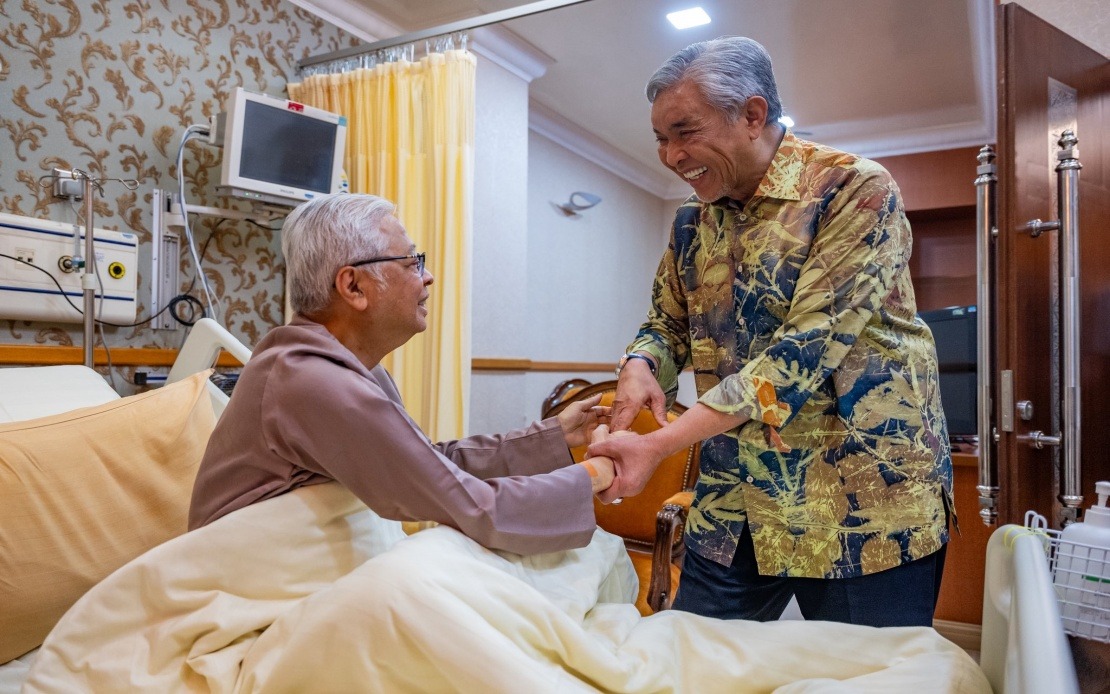
Deputy Prime Minister Datuk Seri Dr Ahmad Zahid Hamidi made a visit to the National Heart Institute (IJN) in Kuala Lumpur to check on former Prime Minister Datuk Seri Ismail Sabri Yaakob, who is undergoing medical treatment at the facility. The visit underscores the ongoing solidarity within Malaysia's political leadership during a period of health concern for one of the nation's recent chief executives.
Ahmad Zahid's gesture extended beyond a simple courtesy call. Taking to social media platform X, the Deputy Prime Minister shared his well-wishes for Ismail Sabri's return to full health. In his message, Ahmad Zahid expressed hope that the Bera Member of Parliament would regain his strength and be blessed with restored wellness, stating his prayer that "all his affairs will be eased, and that he will be granted a full recovery."
The visit arrives in the wake of a significant health incident that befell Ismail Sabri earlier this month. The former Prime Minister experienced an acute health episode on August 6 whilst at the Malaysian Anti-Corruption Commission (MACC) headquarters, where he had been summoned for a statement recording session. The sudden nature of the occurrence necessitated immediate medical intervention, prompting his urgent transfer to the National Heart Institute.
Upon admission to IJN, medical specialists determined that Ismail Sabri required intervention to address an abnormal heart rhythm condition. The treatment pathway chosen involved the implantation of a wireless pacemaker device, a procedure designed to regulate cardiac function and prevent complications associated with irregular heartbeats. This type of intervention represents a significant step in cardiac management and typically requires a period of recovery and monitoring.
The incident has attracted considerable attention given Ismail Sabri's prominent position in Malaysian politics and his relatively recent tenure as Prime Minister, which concluded in August 2022. His hospitalization serves as a reminder of how health challenges can affect even those at the highest levels of government, and highlights the unpredictability of medical emergencies that can occur during routine official duties.
Ahmad Zahid's hospital visit carries symbolic weight within Malaysia's political ecosystem. As the current Deputy Prime Minister serving under Prime Minister Datuk Seri Anwar Ibrahim, his gesture of support demonstrates the tradition of cross-party solidarity during personal health crises. Such visits are customary in Malaysian political culture, where leaders extend compassion to colleagues regardless of current political alignments or past rivalries.
The former Prime Minister's recovery process is expected to involve careful monitoring and a graduated return to normal activities. Ahmad Zahid's specific prayer that Ismail Sabri would "be able to resume his service and daily activities as usual" reflects recognition that recovery from cardiac procedures often requires sustained attention and rehabilitation periods. The implantation of a wireless pacemaker, while less invasive than traditional surgical approaches, still necessitates appropriate follow-up care and lifestyle adjustments.
Ismail Sabri's health setback also highlights the demanding nature of political life in Malaysia, where high-ranking officials often juggle multiple responsibilities and appear before various government institutions for investigative or administrative purposes. The MACC recording session that preceded his health emergency suggests ongoing legal or administrative matters requiring his attention, underscoring the complex pressures that senior politicians navigate.
The hospitalization and subsequent medical procedure represent a watershed moment that may influence Ismail Sabri's future political engagement. While pacemaker implants generally carry positive long-term outcomes with proper management, they often necessitate lifestyle modifications and periodic medical oversight. His return to active political participation will likely depend on both his physical recovery trajectory and any recommendations from his medical team regarding activity levels.
This incident also serves as a broader reminder to Malaysian society about cardiac health awareness. Heart conditions can develop without prior warning and may strike individuals across all walks of life, regardless of status or position. The public nature of Ismail Sabri's medical emergency inadvertently raises consciousness about the importance of regular health screening and immediate medical attention when symptoms manifest.
For the Malaysian political establishment, Ismail Sabri's hospitalization and recovery process will be closely watched. As a former Prime Minister and current Member of Parliament, his health status carries implications for parliamentary proceedings and potential future political developments. His eventual return to full public engagement will signal the effectiveness of his medical treatment and rehabilitation.
The broader political context surrounding Ismail Sabri remains complex, with various investigations and administrative matters potentially affecting his circumstances. His recent MACC appearance and subsequent health emergency have inevitably intersected personal health concerns with ongoing political and legal processes, creating a situation that demands both compassion for his medical plight and appropriate continuation of necessary institutional procedures.
Looking forward, Ismail Sabri's recovery will be monitored not only by his family and medical team but also by the Malaysian public and political community. Ahmad Zahid's hospital visit, coupled with his public expressions of support, reflects the expectation within Malaysia's leadership circles that Ismail Sabri will make a full recovery and continue contributing to parliamentary and national affairs once his health has sufficiently restored.

