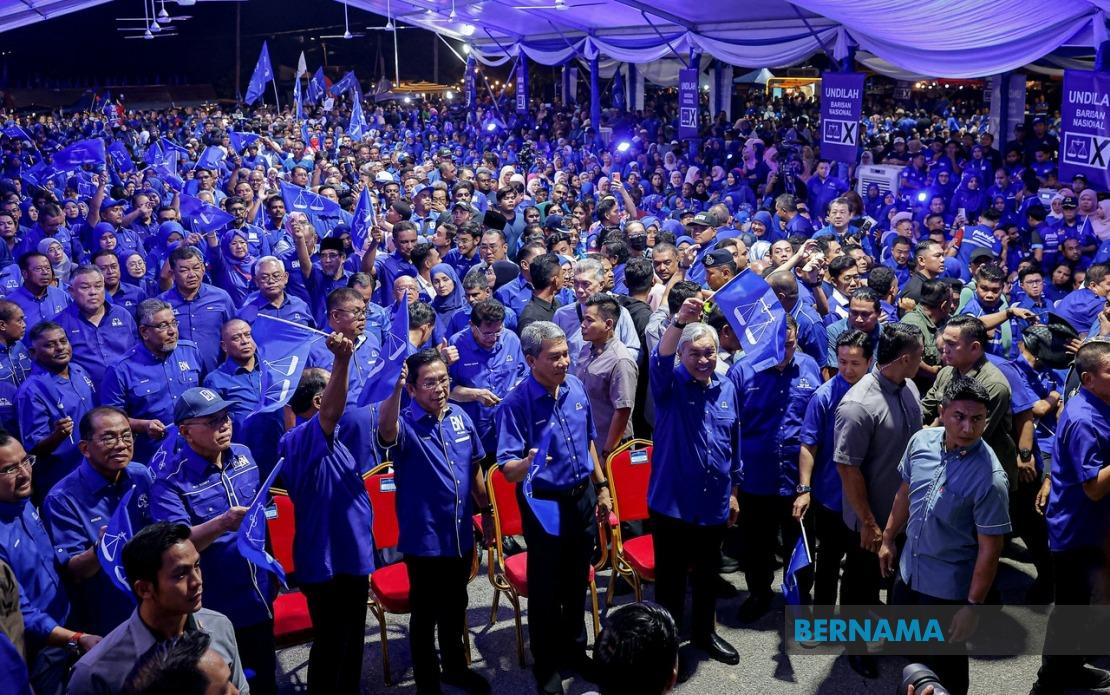
Barisan Nasional's commanding performance in the Johor state election should galvanise the coalition into securing a decisive victory in Negeri Sembilan's upcoming polls, according to BN chairman Datuk Seri Dr Ahmad Zahid Hamidi. Speaking at the launch of the coalition's election machinery for the 16th Negeri Sembilan state election in Seremban on July 15, Ahmad Zahid framed the Johor result as proof of voter appetite for stable, growth-oriented governance and flagged it as a blueprint for replication across state boundaries.
The Johor outcome, in which BN captured 48 of 56 state seats with nearly 60 per cent of the popular vote, represents the coalition's strongest showing in the state's electoral history. Ahmad Zahid interpreted this mandate as a validation of BN's approach to economic management, institutional stability, and responsible administration—themes he emphasised must underpin the Negeri Sembilan campaign. The Deputy Prime Minister positioned the election as a defining moment for the coalition's trajectory in the peninsula's heartland.
Ahmad Zahid stressed that the Johor victory stemmed directly from internal party discipline and tactical alignment across BN's component organisations. He characterised the winning formula as one in which party members transcended factional interests, demonstrated mutual trust, and leveraged each member's comparative strengths toward a collective objective. This emphasis on cohesion carries particular weight for Negeri Sembilan, where candidate selection and leadership positioning have historically sparked internal tensions within BN's rank-and-file.
The BN chairman issued an unusually direct appeal to party machinery to prioritise broader electoral objectives over personal advancement or internal disputes. He cautioned members against allowing candidacy deliberations to overshadow the fundamental responsibility of capturing voter support at grassroots level, a concern that reflects recurring campaign discipline challenges faced by major coalitions in Malaysia's federal structure. Ahmad Zahid's language suggested recognition that factional preoccupation could fracture the unity essential for replicating Johor's dominance.
Deploying measured optimism, Ahmad Zahid acknowledged that BN underperformed in the 2023 Negeri Sembilan state election, securing only 14 seats. However, he expressed confidence the coalition would substantially exceed that performance in the approaching contest, implying both internal party improvement and shifting voter sentiment in BN's favour. This projection aligns with broader momentum the coalition has cultivated since the 2023 general election, though state-level variables—including local economic conditions and personality-driven politics—introduce uncertainty.
The electoral calendar imposes strict operational demands on the coalition's campaign infrastructure. The Election Commission designated July 20 as nomination day, with early voting scheduled for July 28 and polling day set for August 1. This compressed timeline necessitates rapid mobilisation of BN's ground machinery and accelerated candidate vetting—placing premium value on Ahmad Zahid's emphasis on immediate, intensive voter contact through door-to-door engagement.
Ahmad Zahid's invocation of religious sanction—"Insya Allah, victory will belong to Barisan Nasional"—reflects the coalition's framing of electoral contests within a broader moral and spiritual framework that resonates with Malaysia's Malay-Muslim majority base. The rhetoric positions BN not merely as a political contender but as an instrument of divinely-enabled governance, a messaging strategy particularly potent in Negeri Sembilan, where sultanate traditions and communal religious observance shape electoral consciousness.
The presence of BN deputy chairman Datuk Seri Mohamad Hasan and other coalition leaders at the Tuanku Abdul Rahman Stadium event in Paroi signalled institutional commitment to the Negeri Sembilan contest and reinforced hierarchical messaging. As UMNO president and Deputy Prime Minister, Ahmad Zahid's dual authority—combining party command and cabinet rank—grants his exhortations particular weight within BN's disciplinary structures, though effectiveness ultimately depends on subordinate leadership's capacity to translate rhetoric into coordinated action.
For Malaysian observers and regional analysts, BN's Johor triumph and subsequent Negeri Sembilan push carry implications beyond state-level politics. They suggest the coalition has arrested its post-1998 electoral decline and may be consolidating a plateau of competitive viability. Success in Negeri Sembilan would reinforce this recovery narrative and provide psychological momentum for federal-level positioning ahead of the next general election, currently due in 2028 but subject to earlier dissolution under Malaysia's constitutional framework.
The coalition's capacity to sustain campaign momentum across multiple simultaneous or consecutive state elections tests its organisational coherence and resource mobilisation capability. State elections occurring in rapid succession create cumulative demands on party machinery, funding reserves, and leadership attention. BN's performance in Negeri Sembilan will therefore serve as a diagnostic indicator of coalition resilience beyond the Johor context.

