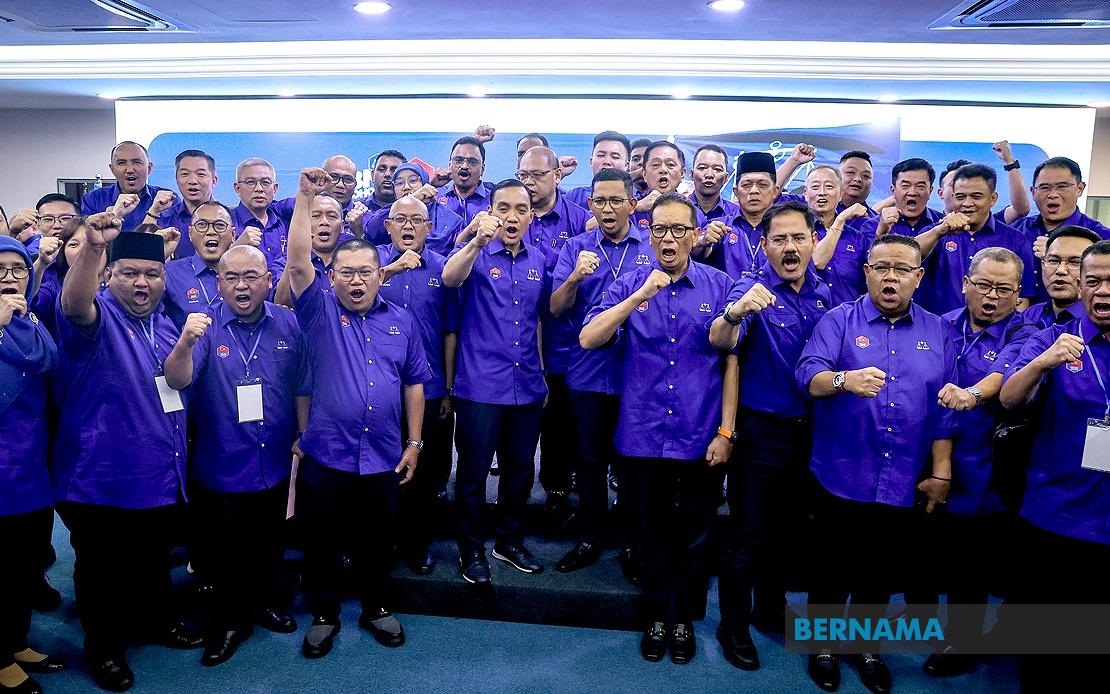
Johor Barisan Nasional has fielded a slate of experienced lawmakers and fresh contenders across all 56 state constituencies for the upcoming 16th Johor state election, signalling the coalition's intent to consolidate its hold on the southern state. The comprehensive candidate roster, unveiled by Johor BN chairman Datuk Onn Hafiz Ghazi, comprises 37 UMNO representatives, 15 from the Malaysian Chinese Association and four from the Malaysian Indian Congress, reflecting the traditional composition of the coalition's power-sharing arrangement in the peninsula's second-largest state.
The announcement carries significant weight given that it received explicit endorsement from Barisan Nasional chairman Datuk Seri Dr Ahmad Zahid Hamidi, underlining the national coalition's confidence in the direction charted by its Johor leadership. This approval mechanism ensures alignment between state-level candidate selection and broader party strategy, a crucial consideration in Malaysia's federal-state political dynamics where local and national interests frequently intersect.
Among the most notable confirmations is the return of Datuk Seri Dr Adham Baba to electoral politics in Pasir Raja, a constituency he previously represented for two consecutive terms spanning 2008 to 2018. Adham, who serves as chief of the Tenggara UMNO division, brings substantial political experience having also served as Member of Parliament for the Tenggara federal seat across two non-consecutive terms between 2004 and 2022, with a hiatus reflecting the broader electoral fluctuations that affected Barisan Nasional's federal performance. His decision to contest at the state level represents a repositioning that could signal either consolidation of grassroots support or a strategic adjustment following his departure from federal ministerial office where he previously held the health portfolio.
Menteri Besar Onn Hafiz Ghazi will seek re-election in the Machap constituency, which he successfully defended in the 2022 state election. This nomination represents the coalition's intention to maintain continuity in its executive leadership, a common pattern in Malaysia's state politics where voters typically reward incumbent chief executives with another term, particularly when they have avoided major controversies. The decision to renominate him reflects confidence in both his personal political capital and his administrative track record over the preceding two years.
A notable departure from the previous election emerges in the Benut constituency, where veteran politician Datuk Seri Hasni Mohammad, who served as Menteri Besar and previously held the Benut state assembly seat, has been excluded from Barisan Nasional's candidate list. This decision suggests a strategic recalibration, possibly intended to introduce new leadership or address local political dynamics that may have shifted since the previous election. In Hasni's place, UMNO has nominated Datuk Mohd Sumali Reduan, who serves as the party's working secretary, indicating that the coalition is attempting to inject fresh energy into this seat through a figure with significant party organisational credentials.
Retention patterns reveal substantial continuity at the mid-ranking executive level, with nine of the ten former Johor state executive councillors who contested in the 2022 election being renominated as candidates. This high retention rate underscores the satisfaction Barisan Nasional leadership expresses in the performance of its second-tier administrators and suggests that the previous state administration's programmes and initiatives have been viewed favourably enough to warrant confidence in these individuals' re-election prospects. The sole exception is Khairin-Nisa Ismail @ Md On, the former State Women, Family and Community Development Committee chairman, who will not be renominated to defend the Serom seat, representing a deliberate decision to transition away from her tenure.
Onn Hafiz's framing of the nomination process carries important messaging for candidates, positioning the selection as conferring not privilege but obligation. His emphasis on conducting campaigns with courtesy, respect and prudence reflects broader concerns within the coalition about maintaining electoral decorum and upholding the values he associates with Johor's political culture. This rhetorical approach serves multiple purposes: it sets behavioural expectations for party candidates, signals to voters that Barisan Nasional takes ethical standards seriously, and establishes benchmarks against which the campaign conduct of opposition rivals can be measured.
For Malaysian and Southeast Asian political observers, the Johor election carries significance beyond state-level implications. As Malaysia's most economically developed state after Selangor and as a geopolitical buffer between federal Kuala Lumpur and Singapore, Johor's electoral direction influences broader national political calculations. A strong Barisan Nasional performance would reinforce the coalition's recovery narrative following its severe 2018 federal election losses, while any softening of its dominance would suggest that voter appetite for change persists in Malaysia's heartland regions despite the coalition's recent federal government re-entry.
The candidate announcement process itself reflects the internal mechanics of Malaysia's major political coalitions, where nominations require careful negotiation among component parties to ensure equitable distribution of winnable seats and appropriate representation of each community's interests. The UMNO-dominated distribution of 37 of 56 seats aligns with the party's numerical dominance within Barisan Nasional and its historical strength in Johor's rural and semi-urban constituencies, while the MCA's 15 allocations reflect its traditional support bases in urban and Chinese-majority areas.
Looking ahead to polling day, several dynamics will shape outcomes. The selection of candidates with deep local roots, such as Adham Baba's return to Pasir Raja, suggests that Barisan Nasional's campaign strategy emphasises continuity and proven competence over dramatic transformations. However, the exclusion of some longer-serving figures and the injection of newer names indicates that the coalition remains responsive to performance metrics and local sentiment, attempting to project the impression of renewal within continuity—a delicate balance that most established political parties must maintain to avoid appearing either stale or chaotic.
For voters across Johor, this candidate slate will shape the political choices available to them and influence which individuals will occupy state assembly seats and contribute to decision-making in the Menteri Besar's cabinet if Barisan Nasional again wins a legislative majority. The composition of this candidate list, therefore, represents not merely an internal party decision but a foundational stage in determining who will exercise executive and legislative power in Malaysia's southern state for the coming electoral cycle.

