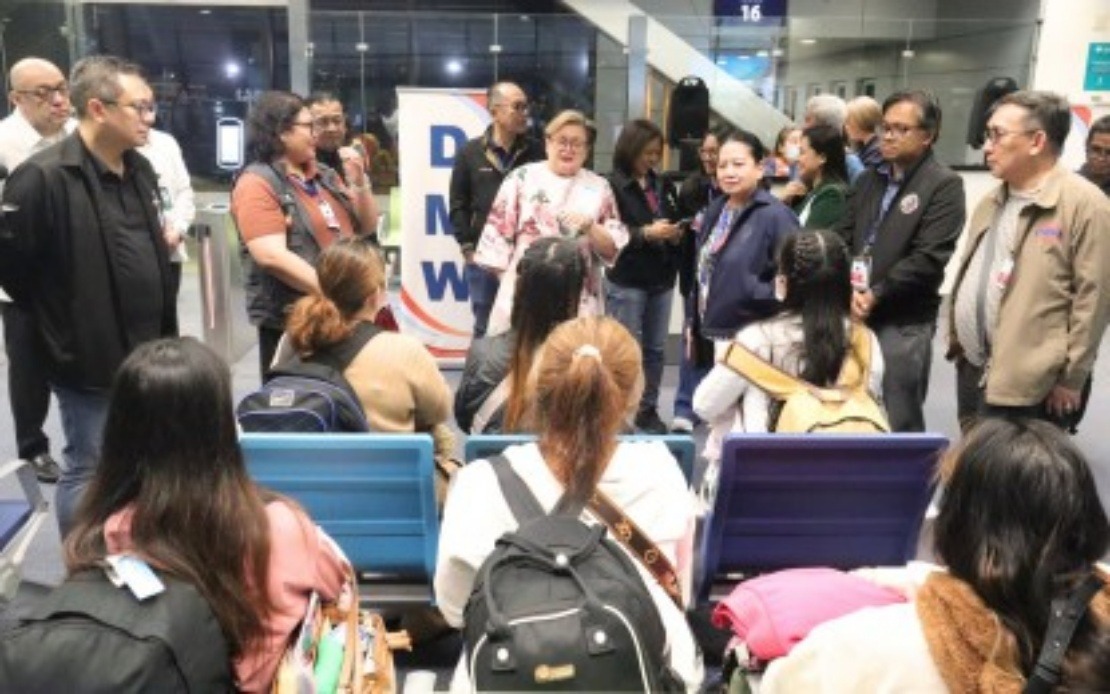
A significant diplomatic intervention has resulted in the safe return of 24 Filipino nationals who had been held in detention in Russia for approximately nine months, marking a resolution to a case that highlighted risks faced by overseas Filipino workers. The repatriated workers touched down at Ninoy Aquino International Airport (NAIA) Terminal 1 in two separate waves on Sunday morning, having transited through Bangkok, Thailand, before completing their journey home. The successful operation followed President Ferdinand R. Marcos Jr's direct personal engagement with Russian President Vladimir Putin during the ASEAN-Russia Commemorative Summit in Kazan earlier in the week, demonstrating the value of high-level diplomatic channels in resolving individual cases affecting citizens abroad.
The returnees arrived through two Philippine Airlines flights, with the first batch of six workers landing shortly after midnight aboard PR737, followed by the remaining eighteen passengers on flight PR733 in the early hours of Sunday morning. Foreign Affairs Secretary Maria Theresa Lazaro and Migrant Workers Secretary Hans Cacdac received the group upon arrival, signaling the importance the Philippine government placed on the repatriation. The coordinated effort involved multiple government agencies, including the Department of Foreign Affairs, the Department of Migrant Workers, and the Overseas Workers Welfare Administration, working in tandem with Russian authorities to execute the operation smoothly.
The detained workers had been held in Irkutsk, a major city in southeastern Siberia, where they remained in Russian custody without facing formal charges throughout their detention period. Initial investigations by Philippine officials indicated that these individuals may have been victims of illegal recruitment schemes that promised employment opportunities but instead resulted in their transport to Russia and subsequent arrest on immigration-related violations. The circumstances surrounding their recruitment and movement to Russia remain under investigation, with authorities seeking to understand how the illegal recruitment network operated and who orchestrated the scheme that affected these workers.
President Marcos's intervention at the Kazan summit proved decisive in expediting the case resolution. During bilateral discussions with Putin, the Philippine leader personally advocated for the release and repatriation of the detained Filipinos, emphasizing the humanitarian aspects of the situation and the workers' desire to return home. Marcos subsequently expressed gratitude to Putin and the Russian government for their cooperation and willingness to facilitate the resolution, acknowledging the diplomatic goodwill that enabled the swift conclusion of the matter. The president's direct involvement underscored the importance Philippines leadership places on protecting and assisting overseas nationals facing legal difficulties abroad.
This case reflects broader vulnerabilities within migration pathways that continue to affect Southeast Asian workers seeking employment opportunities internationally. Illegal recruitment schemes remain a persistent challenge across the region, with unscrupulous agents exploiting workers' aspirations for overseas employment by making false promises about job conditions, wages, and locations. The Philippines, as a major source of overseas workers, has repeatedly warned its citizens about the dangers of unauthorized recruitment agencies, yet the demand for better-paying jobs abroad continues to make workers susceptible to such deception. The Irkutsk detention represents one of several documented instances where Filipino workers have been victimized by international trafficking and recruitment networks.
The repatriation process itself involved careful coordination across borders and between different government entities, demonstrating the logistical complexity of bringing detained nationals home from distant locations. The transit through Bangkok served as a staging point for consolidating the two groups and facilitating their final journey to Manila. The Department of Migrant Workers and OWWA, which specializes in providing support to overseas Filipino workers, will now oversee the integration and rehabilitation of these returnees, offering counseling, financial assistance, and support services to help them readjust to life back in the Philippines. This comprehensive approach aims to address not only the immediate repatriation but also the longer-term wellbeing of workers who experienced prolonged detention abroad.
The broader implications of this case extend to how the Philippines manages its relationship with Russia regarding migrant worker issues. The successful resolution demonstrates that even in periods of geopolitical tension, bilateral channels can remain effective for addressing humanitarian and consular matters affecting individual nationals. The ASEAN-Russia summit provided an opportune diplomatic venue for Marcos to raise the matter directly, leveraging the multilateral gathering to pursue bilateral interests. This approach highlights how regional forums can serve practical purposes beyond their primary agenda, allowing leaders to address specific national concerns through informal channels.
For Malaysian and broader Southeast Asian contexts, this repatriation underscores the critical importance of maintaining robust mechanisms for protecting migrant workers deployed across diverse countries. While the Philippines has developed relatively sophisticated consular and migrant worker support systems, other Southeast Asian labor-sending nations continue to grapple with establishing equivalent protections and diplomatic capacities. The role of the Department of Migrant Workers in coordinating repatriation efforts represents a model that emphasizes specialized institutional approaches to migrant welfare, moving beyond traditional foreign ministry frameworks. As more Southeast Asians seek employment globally, strengthening such institutions and establishing effective diplomatic channels for protecting citizens becomes increasingly vital.
The investigation into the recruitment network that ensnared these workers will likely yield important intelligence about transnational smuggling operations. Philippine authorities have indicated they will pursue investigation into the circumstances surrounding the scheme, potentially leading to arrests and prosecutions of local agents involved in facilitating illegal recruitment. Such investigative work serves a deterrent function, signaling to would-be human traffickers and fraudulent recruiters that the government will pursue accountability. The findings may also inform policy adjustments and awareness campaigns designed to educate workers about recognizing and avoiding fraudulent recruitment offers.
Looking forward, the case presents opportunities for the Philippines to strengthen cooperation with Russia and other countries on migrant worker protection protocols. Establishing clearer communication channels and procedures for handling detained nationals could prevent similar situations in the future and accelerate resolution when issues do occur. The successful outcome in this instance, achieved through presidential-level intervention, also suggests the value of maintaining diplomatic relationships that transcend political differences and focus on practical cooperation benefiting citizens. As global migration patterns continue to evolve and more workers venture to different countries seeking opportunities, systematic frameworks for protection and rapid resolution of problems will become increasingly important for all Southeast Asian nations.

