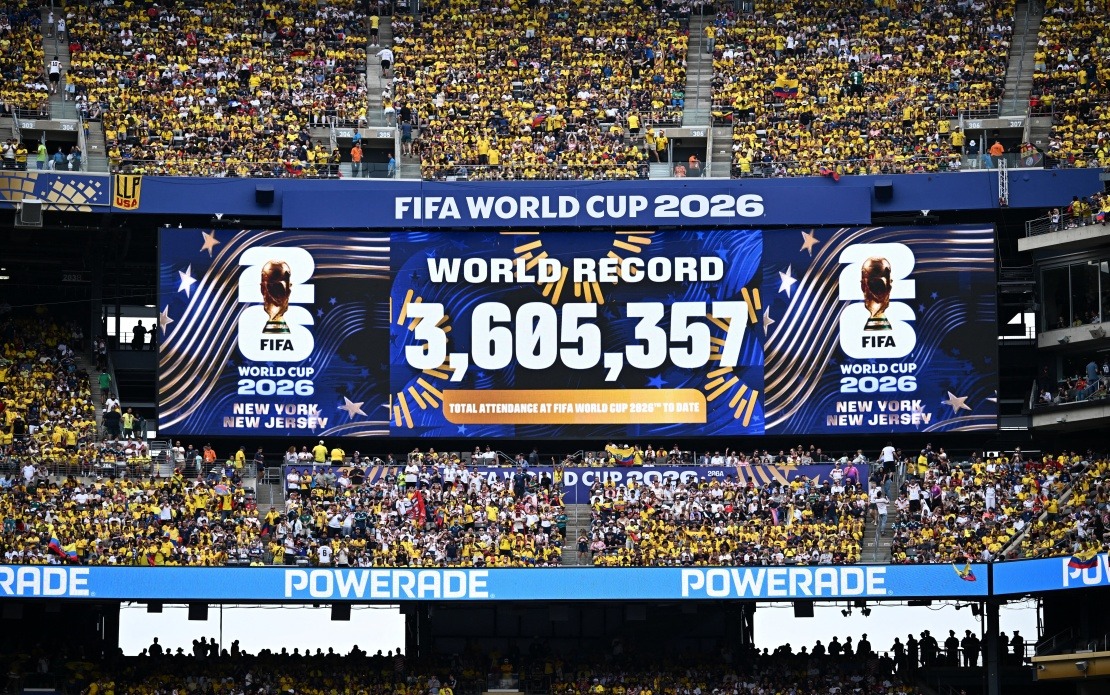
The 2026 FIFA World Cup has etched itself into sporting history by becoming the most-attended tournament ever, surpassing a benchmark that had stood for three decades. The milestone was reached during Germany's encounter with Ecuador in East Rutherford, New Jersey, on June 26, when the cumulative attendance figure crossed 3,605,357—eclipsing the previous record of approximately 3.6 million set during the 1994 tournament hosted in the United States. The momentous announcement resonated through the stadium as giant screens broadcast the achievement, prompting roaring applause from the assembled crowd.
The significance of this record lies not merely in the numbers but in what they represent about global appetite for world football's premier competition. When the 1994 World Cup drew its record attendance, the tournament featured 52 matches across 24 participating nations. The 2026 format represents a fundamental restructuring of the competition, expanding to 48 matches with 32 nations competing, fundamentally altering the tournament's scale and reach. This expansion, jointly hosted across the United States, Canada, and Mexico, has created unprecedented opportunities for spectators across North America to witness elite football.
With approximately half the tournament still pending, the attendance figures are poised to reach historically unprecedented levels. Current projections suggest that final attendance could nearly double the previous record, a remarkable trajectory given that the 1994 tournament essentially maxed out its capacity across fewer matches and a smaller tournament structure. This trajectory underscores the profound commercial and cultural success of the expanded format, validating FIFA's strategic decision to increase the competition's scale.
The venue-specific performance has been exceptional, with stadiums operating at more than 99 percent capacity on average throughout the tournament so far. This extraordinary fill rate indicates robust demand across all 16 host cities, dispelling any concerns about whether expanding to a larger geographic footprint might dilute attendance or create pockets of diminished interest. The widespread enthusiasm spans major American metropolitan centres and secondary markets alike, reflecting football's deepening penetration into North American sporting consciousness.
For Southeast Asian readers, the 2026 World Cup's unprecedented success carries implications for the sport's trajectory in the region. The tournament demonstrates that with proper infrastructure, commercial organization, and cultural investment, football can command massive audiences and generate substantial economic activity. This performance benchmark may influence how regional football associations and governments contemplate future tournament hosting opportunities and investment in stadium facilities.
FIFA President Gianni Infantino characterized the attendance surge as emblematic of football's universal appeal and capacity to unite diverse populations in shared celebration. His perspective emphasizes that the record represents more than statistical achievement—it encapsulates the emotional resonance and cultural significance that the sport commands across disparate communities and demographics. The scenes across the 16 host cities have collectively created a narrative of football transcending traditional boundaries and uniting North America in unprecedented ways.
The economic ramifications of this attendance boom extend beyond the stadiums themselves. Host cities have benefited from substantial tourism spending, hotel occupancy, restaurant patronage, and ancillary services generated by the influx of spectators from across the continent and internationally. This multiplier effect demonstrates how major sporting events can serve as catalysts for regional economic activity, a consideration particularly relevant for developing nations contemplating similar investments.
The infrastructure dimension also merits consideration. The 2026 tournament has showcased how coordinated development across multiple jurisdictions can facilitate world-class sporting experiences. American, Canadian, and Mexican venues have collectively demonstrated capacity to accommodate and manage enormous crowds while maintaining safety and operational standards. This collaborative approach across three nations offers a model that other multinational hosting arrangements might emulate.
For Malaysian football enthusiasts, the 2026 World Cup represents a watershed moment in understanding the sport's commercial potential and global reach. While Malaysia itself remains distant from hosting such a tournament, the success of the expanded format provides valuable lessons about stadium development, fan engagement, and infrastructure investment that could inform Southeast Asian football's long-term strategic planning.
The attendance records also reflect generational shifts in North American sporting preferences. Football's growing prominence among younger demographics continues to reshape the continental sporting landscape, challenging traditional dominance of established sports. The 2026 World Cup's unprecedented attendance figures quantify this cultural realignment, suggesting that football has achieved genuine mainstream status across North America.
Looking forward, these attendance milestones will undoubtedly influence FIFA's strategic planning for future tournaments. The demonstrated capacity to attract audiences at this scale may encourage expansion of future competitions or reconsideration of hosting arrangements for subsequent World Cups. The data generated from the 2026 tournament will likely inform commercial negotiations, venue selection criteria, and tournament formatting decisions for years to come.

