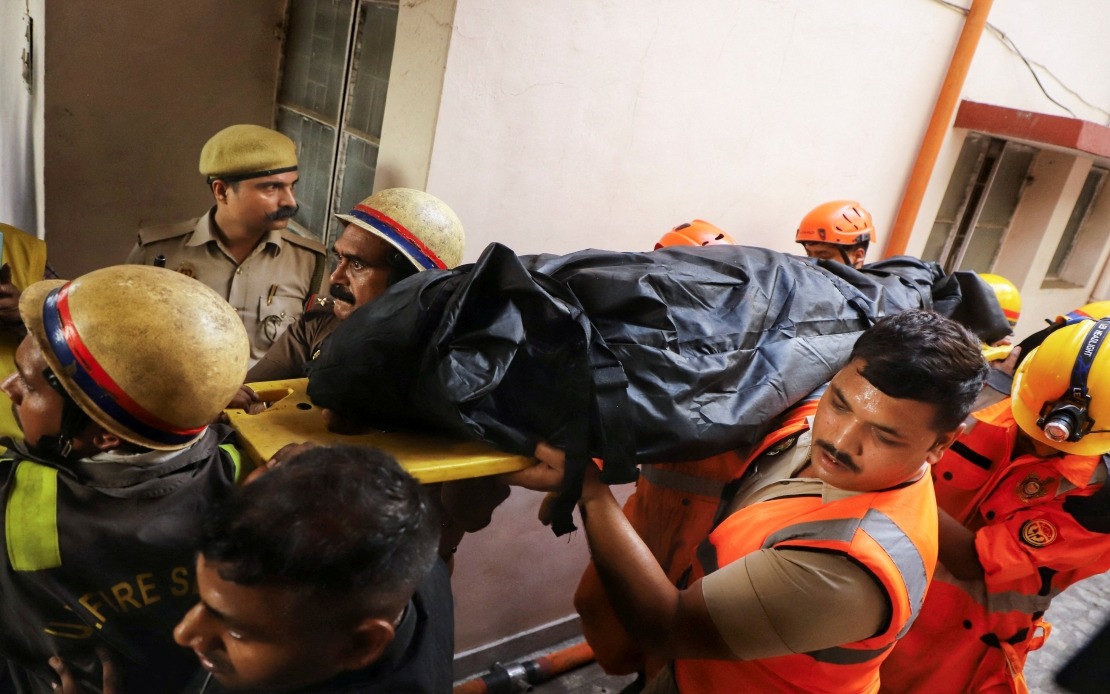
India's Uttar Pradesh state is confronting another major tragedy after a ferocious fire swept through a three-storey commercial building in Lucknow city on Monday, claiming the lives of at least 15 people, predominantly young students enrolled at an animation training facility located within the structure. The blaze, which engulfed the building in the Aliganj locality of the state capital, has reignited serious questions about fire safety compliance and building regulations enforcement across India's metropolitan centres.
The building, which housed not only the animation training centre but also various retail outlets on its lower floors, became a death trap as smoke rapidly filled the corridors and chambers. Horrifying footage circulated on social media platforms showed the desperation of the moment, with several young occupants forced to jump from windows as the inferno consumed the structure around them. Bystanders on the ground below could do little except watch in horror and attempt to summon emergency services, though the chaotic scene made communication difficult in those critical early minutes.
Emergency responders transported over 20 victims to the trauma centre at King George's Medical University (KGMU) for urgent medical intervention. Of those hospitalised, only five individuals survived with injuries requiring treatment, while the remaining 15 victims were pronounced dead upon arrival at the medical facility. The unusually high mortality rate relative to the number hospitalised suggests that many victims succumbed to severe smoke inhalation and burns before rescue teams could extract them from the burning structure.
Yogi Adityanath, Chief Minister of Uttar Pradesh, acknowledged the tragedy through a formal statement made at a campaign rally in a different city, characterising the incident as deeply distressing and extending condolences to the families affected. However, critics argue that such statements, while necessary, ring hollow without concurrent action on the ground to prevent recurring disasters of this nature across the state.
The Lucknow catastrophe arrives merely weeks after a similarly devastating fire claimed at least 22 lives at a hotel in Delhi, prompting alarm among safety advocates who contend that India faces a systemic crisis in building fire prevention and emergency preparedness. The Delhi incident resulted in numerous fatalities among foreign nationals who had travelled to India seeking medical treatment, adding an international dimension to what many view as a growing national embarrassment.
Analysts point to several recurring deficiencies that characterise fire emergencies in Indian commercial and residential buildings. Inadequate emergency exits remain commonplace, with many structures featuring only single stairwells that quickly become impassable when smoke fills them. Fire suppression equipment is frequently absent, outdated, or deliberately removed to maximise usable floor space in buildings where every square metre generates rental income. Building codes exist on paper but enforcement by municipal authorities remains lax, with inspections either infrequent or corrupted through informal payments to overlooking officials.
The tragedy at an animation training centre is particularly significant given that such facilities typically attract young people in their late teens and early twenties who may be unfamiliar with the specific building layout and emergency procedures. Unlike established educational institutions with formal safety protocols and regular drills, private training centres often operate with minimal oversight and frequently relocate, meaning that comprehensive safety audits rarely occur. The concentration of young occupants amplifies the human toll when disasters strike.
For Malaysian authorities and urban planners, the Lucknow incident provides cautionary perspective on the consequences of permitting mixed-use commercial buildings to operate without stringent fire safety certification. Malaysia's building regulations, while not perfect, are considerably more robust than those enforced across much of India, and incidents like this underscore the value of maintaining those standards and resisting pressure from developers to relax safety requirements in pursuit of higher profit margins.
The psychological impact of watching animated demonstrations online of young people forced to choose between the flames behind them and the pavement below cannot be overstated. This imagery will reverberate through Indian society and may finally catalyse meaningful regulatory reform, though previous disasters have similarly sparked promises of change that evaporated without substantive implementation. Civil society organisations in India are already calling for independent audits of all commercial buildings and stricter penalties for building owners who fail safety inspections.
The immediate challenge facing Uttar Pradesh authorities involves identifying all victims and notifying families, alongside conducting a thorough forensic investigation to determine the fire's origin. Preliminary reports suggest that faulty electrical wiring may have been responsible, a factor implicated in numerous previous building fires across India. Whether this particular building had been subject to any safety inspections in the months preceding the fire, and if so, what deficiencies were identified and left unaddressed, will emerge during investigations.
Beyond the immediate aftermath and investigation, the tragedy highlights the urgent necessity for India to establish and enforce a national building safety framework that transcends state boundaries and applies uniformly across metropolitan areas. Training emergency responders, requiring regular fire drills in all commercial buildings, and implementing transparent building inspection regimes would represent meaningful steps toward prevention. Without such systemic changes, India appears destined to experience recurring disasters that could have been prevented through basic safety discipline and regulatory enforcement.

